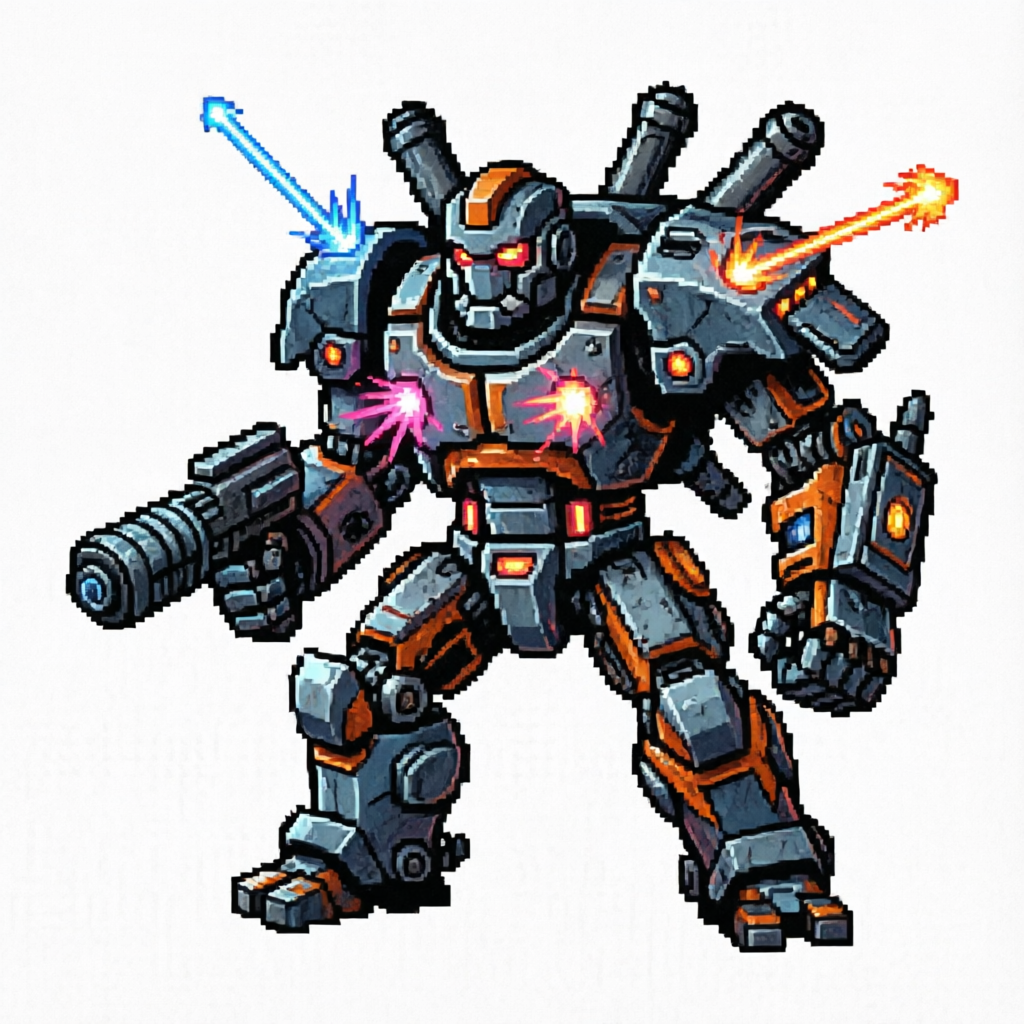
Build a Boss Custom Boss Guide: Advanced Mechanics, Stats, and Balancing
Master the mechanics of a build a boss custom boss setup. Learn formulas, scaling stats, ability scripting, and balance tips for epic multiplayer battles.
Crafting your own raid encounters turns an ordinary arena shooter or action RPG into an unforgettable showdown. Learning how to build a boss custom boss allows creators to push combat systems to their absolute limits while delivering fair, heart-pounding challenges for raiding teams. When you design a build a boss custom boss from the ground up, you control everything from health scaling curves and rage meters to multi-stage bullet hell sequences. Understanding the math and behavioral logic behind these encounters separates a frustrating meat-sponge from a legendary fight.
Designing custom juggernauts—a concept popularized by community mods across multiplayer sandboxes and games like Team Fortress 2 (via the classic Valve Developer Community scripting frameworks)—requires balancing player damage output against creative boss mechanics. In this guide, we break down core design principles, health-scaling formulas, phased ability scripting, and playtesting metrics so your creations conquer the server without causing mass rage-quits.
Core Anatomy of a Custom Encounter
Every memorable encounter relies on a structured gameplay loop. If an enemy simply walks forward while soaking up thousands of bullets, the fight quickly becomes a chore. Instead, modular boss design combines survivability, movement mechanics, and crowd-control counters into a coherent package.
A functional build a boss custom boss configuration balances dynamic mobility, crowd control (CC) resistance, and predictable attack wind-ups. Bosses need mobility tools—such as super jumps, ground pounds, or short-range teleports—to prevent player teams from exploiting terrain heights and safe spots.
| Design Component | Typical Implementation | Intended Player Counterplay | Common Pitfall |
|---|---|---|---|
| Mobility Skill | Super Jump / Dash charge | Spreading out, tracking aerial trajectory | Clipping through geometry or getting stuck |
| Damage Mitigation | Flat armor + CC duration cap | Focus fire, sustained elemental damage | Total invulnerability phases that drag |
| Rage / Rage-meter | Charge on damage taken | Pacing bursts, triggering bait abilities | Instant team-wipes with zero telegraphing |
| Minion Summons | Periodic waves (HP thresholds) | Dedicated add-clearing sub-roles | Overwhelming the server with entity lag |
| Enrage Timer | Hard cutoff at 8–10 minutes | Maximum DPS execution | Forcing gear checks rather than skill checks |
Health Formulas and Scaling Systems
The most critical math in boss design involves health pool calculations. When you build a boss custom boss, static health pools completely ruin the experience for varying server sizes. A health pool calibrated for four players turns into paper against a 16-player lobby, while an overtuned pool makes low-population matches mathematically impossible.
Dynamic Player-Count Scaling
Dynamic scaling automatically samples the active player roster at the start of the round and recalculates base stats.
Boss Health = Base HP + (Scaling Factor × Active Player Count ^ Scaling Curve)
In standard balance passes, community reports suggest setting the scaling curve between 1.15 and 1.30. Linear scaling (1.0) fails because larger groups benefit exponentially from stacking debuffs, healing auras, and focus fire.
| Player Count | Base HP | Linear Scaling (1.0) | Exponential Curve (1.25) | Recommended Armor Rating |
|---|---|---|---|---|
| 1 Player (Solo) | 4,000 | 4,000 | 4,000 | 0% (Flat damage) |
| 4 Players | 4,000 | 16,000 | 22,600 | 10% mitigation |
| 8 Players | 4,000 | 32,000 | 53,800 | 18% mitigation |
| 12 Players | 4,000 | 48,000 | 89,400 | 24% mitigation |
| 16 Players | 4,000 | 64,000 | 128,600 | 30% mitigation |
Crowd Control Resilience
Never allow stuns, slows, or knockbacks to apply at 100% effectiveness. Successful creators implement diminishing returns or convert hard stuns into brief slow debuffs. For example:
- Knockback Resistance: Reduce incoming displacement vectors by 70% to 85%.
- Stun Clamping: Limit total stun duration to a maximum of 0.75 seconds, triggering 5 seconds of complete CC immunity immediately afterward.
- Debuff Caps: Prevent percentage-based damage debuffs (like bleed or burn) from stacking infinitely.
Designing Dynamic Phases and Abilities
Linear health bars drain excitement. Multi-stage encounters inject urgency, forcing players to adapt their positioning and utility usage on the fly. When you build a boss custom boss, separating the fight into 3 distinct phases keeps engagement high from spawn to defeat.
[ Phase 1: 100% - 66% HP ]  -->  Standard Melee / Basic Ranged Harass
             ↓
[ Phase 2: 65% - 31% HP ]   -->  Arena Hazard Activation / Adds Spawn
             ↓
[ Phase 3: 30% - 0% HP ]    -->  Desperation Mode: Increased Haste & Nova Attacks
Phase Transition Mechanics
Transition points should feature brief visual telegraphs—such as shockwaves, roar animations, or temporary shield barriers—that push players back without causing instant, unavoidable deaths.
| Phase | Boss HP Threshold | Primary Ability Behavior | Sound / VFX Cue | Target Player Action |
|---|---|---|---|---|
| Phase 1 | 100% to 66% | Sweeping strikes, ground slams | Low hum, dust particles | Spacing out, learning telegraphed swings |
| Phase 2 | 65% to 31% | Arena bombardment, minion call | High-pitch siren, screen tremor | Splitting targets, prioritizing adds |
| Phase 3 | 30% to 0% | Double attack speed, enraged charge | Red aura, boss roar | Burning cooldowns, maintaining dodge rotation |
Telegraphing and Audio-Visual Signatures
Fairness relies entirely on clear communication. A player should never ask, "What just killed me?"
- Startup Frames: Ensure heavy, lethal attacks have at least a 1.2-second windup.
- Audio Stems: Assign unique sound triggers to distinct attacks (e.g., a metallic click for a dash, a guttural yell for an area-of-effect blast).
- Decal Projections: Draw ground rings indicating blast radiuses so players can measure safe zones reliably.
Class and Weapon Balance Considerations
A common design pitfall when you deploy a build a boss custom boss is over-indexing against specific player loadouts. For example, giving a boss extreme ranged-damage resistance completely invalidates sniper archetypes, while extreme melee punishment shuts down close-quarters specialists.
| Player Archetype | Boss Strength Against Class | Counterplay Mechanism to Include | Balance Adjustment Metric |
|---|---|---|---|
| Long-Range / Snipers | High bullet drop resistance | Give boss projectile shields or dash gaps | Allow headshots to deal 1.5x rather than 3x crit |
| Burst Melee | Massive melee cleave damage | Introduce safe windows after heavy swings | Add micro-stagger on heavy back-stabs |
| Support / Healers | High target prioritization | Telegraph gap-closers to give peel time | Cap boss healing reduction auras to 35% |
| Area Denial / Traps | Large collision box clears traps | Boss detonates traps with slight self-damage | Traps grant slight slow instead of full immobilization |
Player experience and community reports show that encounters thrive when every class contributes to a shared victory condition. If support classes feel their healing output is meaningless or burst damage dealers feel their hits are absorbed without visual impact, player engagement drops rapidly.
Step-by-Step Implementation Framework
Bringing a custom adversary to life requires methodical testing. Follow this standard deployment pipeline to minimize game-breaking glitches:
Concept & Silhouette --> Hitbox & Movement Rig --> Stat Baseline --> Ability Logic --> Closed Server Stress Test
1. Establish the Model Silhouette
Choose or rig a model that towers noticeably over standard player heights (typically 1.3x to 1.8x player scale). A distinct silhouette ensures players can identify the boss across smoky, chaotic maps.
2. Configure Hitboxes and Precision Zones
Ensure that critical-hit boxes (such as the head or a glowing core) match the visual mesh. Offset or disjointed hitboxes lead to missed shots that feel unresponsive and buggy to the shooter.
3. Implement the Baseline Ability Logic
Set up core triggers before adding visual polish. Test your timers in simple development environments:
- Calculate weapon swing cooldowns.
- Map mobility inputs to directional keys or AI range triggers.
- Script the rage-meter gain per damage instance.
4. Stress Test and Iteration
Host private matches with trusted testers to capture performance metrics. Watch for server tick rate drops during particle-heavy abilities, and adjust projectile lifetimes accordingly.
Playtesting Metrics and Tuning Checklist
Once your encounter is playable, rely on cold hard data rather than guesswork to fine-tune your parameters. Record match statistics across at least 25 to 50 rounds to determine if the boss is tuned correctly.
| Metric | Target Sweet Spot | Red Flag Indicator | Corrective Action |
|---|---|---|---|
| Round Duration | 3.5 to 5.5 minutes | Under 2 minutes or over 8 minutes | Adjust base health or enrage timer |
| Boss Win Rate | 45% to 55% | Win rate above 70% or below 30% | Adjust damage output per hit |
| First Player Death | Minute 1:00 to 1:30 | First death under 20 seconds | Increase telegraph times on opening attacks |
| Phase 3 Reached | 75% of completed rounds | Teams wipe in Phase 1 consistently | Reduce Phase 1 aggression and crowd control |
Use the following quick checklist during testing:
- Does the boss get trapped on standard door frames or low ceilings?
- Are all sound cues audible across the maximum arena engagement distance?
- Does the UI accurately track remaining boss health in real time?
- Do rage-mode activations grant brief invulnerability to prevent immediate bursting?
- Is movement speed calibrated so players with standard mobility can maintain distance with proper positioning?
Frequently Asked Questions
What is the most common mistake when people build a boss custom boss?
The most widespread error is creating an encounter with massive health pools and untelegraphed, one-shot attacks. A well-designed boss should feel like a dance: attacks should be clearly telegraphed, punishing bad positioning rather than triggering instant wipes from unavoidable mechanics.
How do I stop players from exploiting arena terrain against my custom boss?
Include vertical mobility abilities such as a high-velocity super jump or a target-pulling grapple hook. Additionally, program an out-of-bounds or "anti-camp" check: if the boss cannot pathfind to a damaging player within 6 seconds, trigger an arena-wide mortar or projectile sweep targeting elevated snipers.
How much damage should a custom boss deal per attack?
Standard auto-attacks should deal between 20% to 35% of an average player's maximum health pool, allowing room for recovery and healing. High-damage abilities (such as a telegraphed ground slam) can deal 70% to 85% damage, leaving players clinging to life if they make a positioning mistake. Reserve instant-kill mechanics strictly for failed enrage timers.
Can I build a boss custom boss suitable for both solo and group play?
Yes, provided you implement dynamic stat scaling that adjusts boss health, damage output, and minion spawn frequency based on the number of connected players. Without an automated scaling formula, an encounter designed for group raids will overwhelm a solo player through sheer action economy.
Related Guides
Build a Boss: Boss Design Fundamentals for Truly Unforgettable Encounters
Learn how to master build a boss boss design mechanics, structure multi-phase fights, telegraph attacks, and create balanced, memorable game encounters.
Build a Boss: Boss Ideas and Encounter Mechanics for Epic Battles
Level up your game design with our guide to build a boss. Explore creative boss ideas, multi-phase mechanics, telegraphed attacks, and encounter designs.
How to Build a Boss Boss Battle: The Complete Game Mechanics Guide
Learn how to build a boss boss battle with expert pacing, telegraphing, multi-phase structures, and combat mechanics that captivate players.
How to Build a Boss Custom Boss Fight: Mechanics, Balancing, and Creation Guide
Learn how to build a boss custom boss fight from scratch. Master attack patterns, phase transitions, visual telegraphs, and playtesting mechanics.