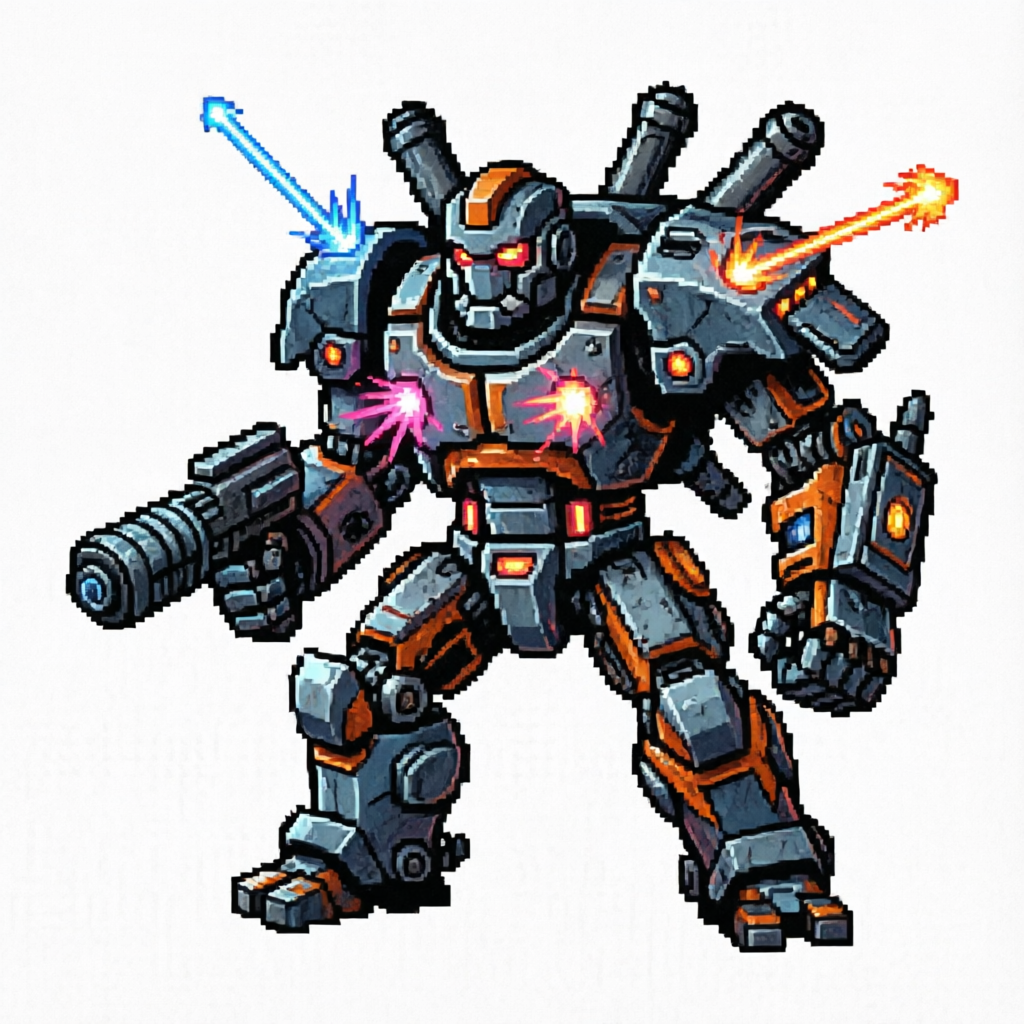
How to Build a Boss Boss Battle: The Complete Game Mechanics Guide
Learn how to build a boss boss battle with expert pacing, telegraphing, multi-phase structures, and combat mechanics that captivate players.
Every memorable video game climaxes with a masterclass encounter that pushes gameplay systems to their absolute limits. When developers sit down to build a boss boss battle, they are not merely programming a high-health punching bag; they are composing an interactive symphony of tension, release, and skill verification. Learning how to properly build a boss boss battle transforms mundane combat into an iconic milestone that players discuss long after credits roll.
Whether designing an indie platformer or an expansive RPG, crafting these encounters demands a profound grasp of pacing, telegraphing, and spatial design. A brilliant fight validates the player's journey, forcing them to synthesize everything they have learned across previous levels against an overpowering foe.
Core Pillars of Encounter Architecture
Before writing a single line of state-machine code or drawing 3D hitboxes, designers must determine the mechanical philosophy behind the confrontation. An exceptional boss is an exam testing the player's curriculum. If a dungeon introduced wall-jumping and projectile parrying, the dungeon master must mandate mastery of those exact mechanics.
Game development analysis on Game Developer's design guides consistently emphasizes that encounter satisfaction hinges on a dynamic curve of tension and catharsis. Throwing overwhelming chaos at players without legible rules produces frustration rather than healthy friction.
| Encounter Pillar | Primary Objective | Failure Mode (What to Avoid) |
|---|---|---|
| Mechanical Synthesis | Combines 2–3 previously taught skills into a singular challenge. | Introducing sudden, untelegraphed gimmicks never seen before. |
| Legible Telegraphing | Visual/audio wind-ups that communicate attack zones and timing. | Instantaneous, zero-frame hitboxes that trigger unavoidable damage. |
| Dynamic Tension | Alternating between intense offensive bursts and recovery windows. | Static damage sponges with unvarying rhythm that induce boredom. |
| Spatial Awareness | Forcing players to read the arena floor, hazards, and borders. | Flat, featureless arenas that ignore environmental positioning. |
When you establish these foundational pillars early, you set clear boundaries. Players accept defeat when they understand what went wrong, turning failure into motivation.
Archetypes: Selecting the Right Boss Template
Every epic showdown stems from a core behavioral archetype. Deciding which model fits your game ensures combat pacing aligns with character mechanics. A twitch-reflex action game benefits from a mirror adversary, while an isometric strategy title favors environmental behemoths.
| Boss Archetype | Typical Scale | Signature Mechanical Behaviors | Player Skill Tested |
|---|---|---|---|
| The Duelist / Mirror | Humanoid (1:1 scale) | High mobility, parrying, counter-attacks, input-reading feints | Reaction time, frame data knowledge, defensive counter-play |
| The Colossus | Massive (10:1+ scale) | Area-of-effect slams, slow sweep attacks, climbable weak points | Spatial positioning, macro-movement, endurance |
| The Puppet Master | Variable | Minion summons, zone denial, invulnerability shields, totems | Target prioritization, crowd control, situational triage |
| The Puzzle Gimmick | Variable | Immune to direct weapon damage; defeated via environmental triggers | Deductive reasoning, survival under acute stress |
Choosing the right archetype guides how you build a boss boss battle from the ground up, dictating arena size, camera angles, and health pools.
Phase Structuring and the Escalation Arc
Monotonous combat drains excitement. If a boss cycles through the same three moves from 100% health to zero, the encounter degenerates into an endurance test. Multi-phase architecture keeps heart rates elevated by shifting the rules of engagement just as the player achieves comfort.
Phase 1: Foundation (100% - 70% HP)
  └─ Establish base attack rhythm, teach wind-ups, low arena hazards.
Phase 2: Escalation (70% - 30% HP)
  └─ Accelerate animations, combine attack strings, introduce arena hazards.
Phase 3: Desperation / Climax (30% - 0% HP)
  └─ Maximum velocity, altered visual atmosphere, high-risk punish windows.
To build a boss boss battle with lasting impact, structure phase transitions around distinct shifts in tempo and arena state.
| Combat Phase | Boss Health Range | Attack Complexity | Arena Dynamics | Punish Opportunity |
|---|---|---|---|---|
| Phase 1: Tutorialization | 100% – 70% | Single strikes, wide recovery windows, clear audio cues | Pristine arena, wide safety zones | Generous windows (2.5–3.5 seconds) |
| Phase 2: The Twist | 70% – 35% | Two-to-three hit combos, gap-closers, lingering ground hazards | Perimeter collapsibility, falling debris | Moderate windows (1.5–2.0 seconds) |
| Phase 3: The Climax | 35% – 0% | Extended strings, deceptive delays, relentless arena-wide sweeps | Constricted play space, environmental chaos | Tight, risky windows (0.8–1.2 seconds) |
During playtesting, track where test groups fail. According to community reports across game development forums, an ideal difficulty curve exhibits death spikes clustered predominantly in the final third of Phase 2 and throughout Phase 3, proving Phase 1 successfully onboarded the player.
Action-Economy, Telegraphing, and Audio-Visual Signposting
Fairness defines player satisfaction. A boss can deal 95% damage in a single strike, provided the attack carries unmistakable visual and auditory warnings. Telegraphing transforms chaotic encounters into readable puzzles.
Wind-up (Anticipation)  ──>  Strike (Active Hitbox)  ──>  Recovery (Punish Window)
  [Visual flare / audio cue]    [0.1 - 0.4 seconds]         [Player deals damage]
1. The Pre-Attack Tell (Anticipation)
The boss coils backward, raises an arm, or charges a glowing particle effect. Sound effects should occupy clean frequencies in your audio mix—a distinct chime, roar, or blade-scrape that alerts players even off-camera.
2. The Execution (Active Hitbox)
The swing lands. Hitboxes should map strictly to visible weapon geometries. Lingering invisible damage zones represent one of the fastest ways to destroy combat trust.
3. The Recovery (Vulnerability Frame)
After expending tremendous energy, the boss pauses to recover, pant, or wrench an embedded weapon from the stone floor. This is the player's reward—a clear opening to unleash damage rotations.
Arena Design: The Unsung Combatant
An encounter takes place within an ecosystem. Never drop a formidable enemy onto an empty, infinite flat plane unless your core mechanics strictly demand blank-slate dueling. The physical space dictates movement, line of sight, and strategic utility.
| Arena Layout Style | Strategic Focus | Common Tactical Features | Ideal Use Case |
|---|---|---|---|
| Pillared Sanctum | Line-of-sight breaking | Destructible columns, elevated perches | Ranged projectile bosses, charge-heavy brutes |
| Shrinking Platform | Urgency & positioning | Falling perimeter tiles, rising lava/void | DPS-race encounters, late-game apex bosses |
| Multi-Tiered Ring | Vertical mobility | Jump pads, grapple points, lower trenches | Aerial skirmishers, multi-target encounters |
| Hazardous Funnel | Spatial restriction | Moving laser grids, elemental patches | Bullet-hell combat, rhythm-action hybrids |
When you meticulously build a boss boss battle, treating the arena as an active combatant prevents the player from relying on repetitive kiting tactics.
Technical Implementation: Step-by-Step Production Pipeline
Moving from conceptual sketches to executable code requires a methodical workflow. Building mechanics without iteration leads to bloated AI scripts and mismatched animations.
1. Blockout & Whitebox ──> 2. Core State Machine ──> 3. Hitbox Tuning ──> 4. Telegraphs & SFX ──> 5. Playtest Balance
Stage 1: Whiteboxing and Mechanics Prototyping
Assemble basic geometric primitives for both arena and enemy. Program movement speed, turn rates, and base attack ranges using placeholder assets. If the encounter lacks tension when fighting an untextured cylinder, elaborate animations won't rescue it.
Stage 2: Finite State Machine (FSM) Configuration
Construct your AI logic around robust state transitions. Ensure clear rules governing distance checking, target tracking, attack cooldowns, and stagger thresholds.
                ┌───────────────┐
                │   IDLE/SEEK   │
                └───────┬───────┘
                        │ Target in range
                        ▼
                ┌───────────────┐
      ┌─────────┤   TELEGRAPH   ├─────────┐
      │         └───────────────┘         │
Short │ Range                       Long  │ Range
      ▼                                   ▼
┌───────────┐                       ┌───────────┐
│ LIGHT SLAM│                       │DASH THRUST│
└─────┬─────┘                       └─────┬─────┘
      │                                   │
      └─────────► ┌───────────┐ ◄─────────┘
                  │ RECOVERY  │
                  └─────┬─────┘
                        │ Cooldown elapsed
                        ▼
                  (Return to SEEK)
Stage 3: Hitbox and Hurtbox Calibration
Tune collision volumes strictly. Ensure hurtboxes (where the boss takes damage) are generous enough to prevent frustrating misses, while offensive hitboxes accurately mirror visual meshes.
Stage 4: Polish, Audiovisual Cues, and Camera Behavior
Integrate cinematic flourishes: camera shakes on ground impacts, orchestral transitions between stages, and screen freezes (hit-stop) lasting 2 to 6 frames when heavy hits connect. Hit-stop provides visceral weight to combat interactions.
Balancing Metrics: Health Pools, TTK, and Player Margin for Error
Mathematical balance separates an exhilarating triumph from an exhausting grind. Time-to-Kill (TTK) metrics must mirror the core gameplay rhythm. Fast-paced action games thrive on high lethality for both combatants, whereas tactical RPGs favor extended, resource-draining engagements.
| Game Genre Style | Target Fight Duration | Boss Hits to Defeat Player | Player Openings Needed | Stagger/Stun Threshold |
|---|---|---|---|---|
| High-Speed Character Action | 2.5 – 4.0 Minutes | 3 – 5 clean hits | 12 – 16 optimal combos | Every 15% HP or via parry |
| Soulslike / Action RPG | 3.0 – 6.0 Minutes | 2 – 4 clean hits | 20 – 25 single punishes | Poise-break meter depletion |
| Metroidvania / 2D Platformer | 2.0 – 3.5 Minutes | 4 – 6 clean hits | 15 – 20 jump/slash windows | Periodic phase interrupts |
| Top-Down Bullet Hell | 1.5 – 3.0 Minutes | 1 – 3 clean hits | Continuous sustained fire | Bullet clears between waves |
By analyzing these metrics, developers discover how to build a boss boss battle that respects player time while delivering an authentic test of skill.
Common Pitfalls That Ruin Boss Encounters
Even experienced designers stumble into traps that sour an otherwise breathtaking encounter. Player experience reports routinely highlight three design flaws that break combat immersion:
- Unchecked Input Reading: When an AI detects player button presses within a single frame to dodge or counter instantaneously, players feel cheated. Introduce slight reaction latencies (150–250ms) to AI decision loops.
- Artificial Invulnerability Windows: Forcing players to sit idle while a boss hovers out of reach for prolonged stretches stalls momentum. If a boss goes airborne, give players secondary tasks like clearing ads or deflecting projectiles back at the foe.
- Visual Clutter and Camera Occlusion: If an arena wall wedges the third-person camera into the player character’s skull, mechanics collapse. Program camera smoothing, dynamic distance pull-backs, and silhouette transparency for foreground obstacles.
Avoiding these traps ensures your encounter remains a test of tactical execution rather than a struggle against engine limitations.
Frequently Asked Questions
What is the most critical element when you build a boss boss battle?
The most critical element is clear telegraphing paired with predictable vulnerability windows. Players must be able to read why an attack struck them and instinctively identify their opening to retaliate. Without readable signposting, difficulty feels artificial and unearned.
How many phases should an effective boss encounter feature?
For most action titles, two to three phases represent the sweet spot. A single phase risks monotony, while four or more phases can exhaust player endurance unless checkpointed. Two distinct phases allow for an escalation of mechanics without outstaying the encounter's welcome.
How do designers prevent players from exploiting cheese strategies?
Prevent cheese tactics by designing versatile gap-closers, dynamic projectile barriers, and adaptive positioning behaviors. If a player attempts to camp at extreme range, the boss should possess dedicated leap attacks, cover-piercing artillery, or teleportation mechanics to reset neutral spacing.
Should every boss encounter include adds (minion spawns)?
No. Summoning smaller minions often dilutes the intimacy of a duel. Adds work best when used deliberately to replenish player resources (such as health drops, ammo, or super-meter charge) in resource-intensive combat engines, rather than simply inflating encounter difficulty.
Related Guides
Build a Boss Custom Boss Guide: Advanced Mechanics, Stats, and Balancing
Master the mechanics of a build a boss custom boss setup. Learn formulas, scaling stats, ability scripting, and balance tips for epic multiplayer battles.
Build a Boss: Boss Design Fundamentals for Truly Unforgettable Encounters
Learn how to master build a boss boss design mechanics, structure multi-phase fights, telegraph attacks, and create balanced, memorable game encounters.
Build a Boss: Boss Ideas and Encounter Mechanics for Epic Battles
Level up your game design with our guide to build a boss. Explore creative boss ideas, multi-phase mechanics, telegraphed attacks, and encounter designs.
How to Build a Boss Custom Boss Fight: Mechanics, Balancing, and Creation Guide
Learn how to build a boss custom boss fight from scratch. Master attack patterns, phase transitions, visual telegraphs, and playtesting mechanics.