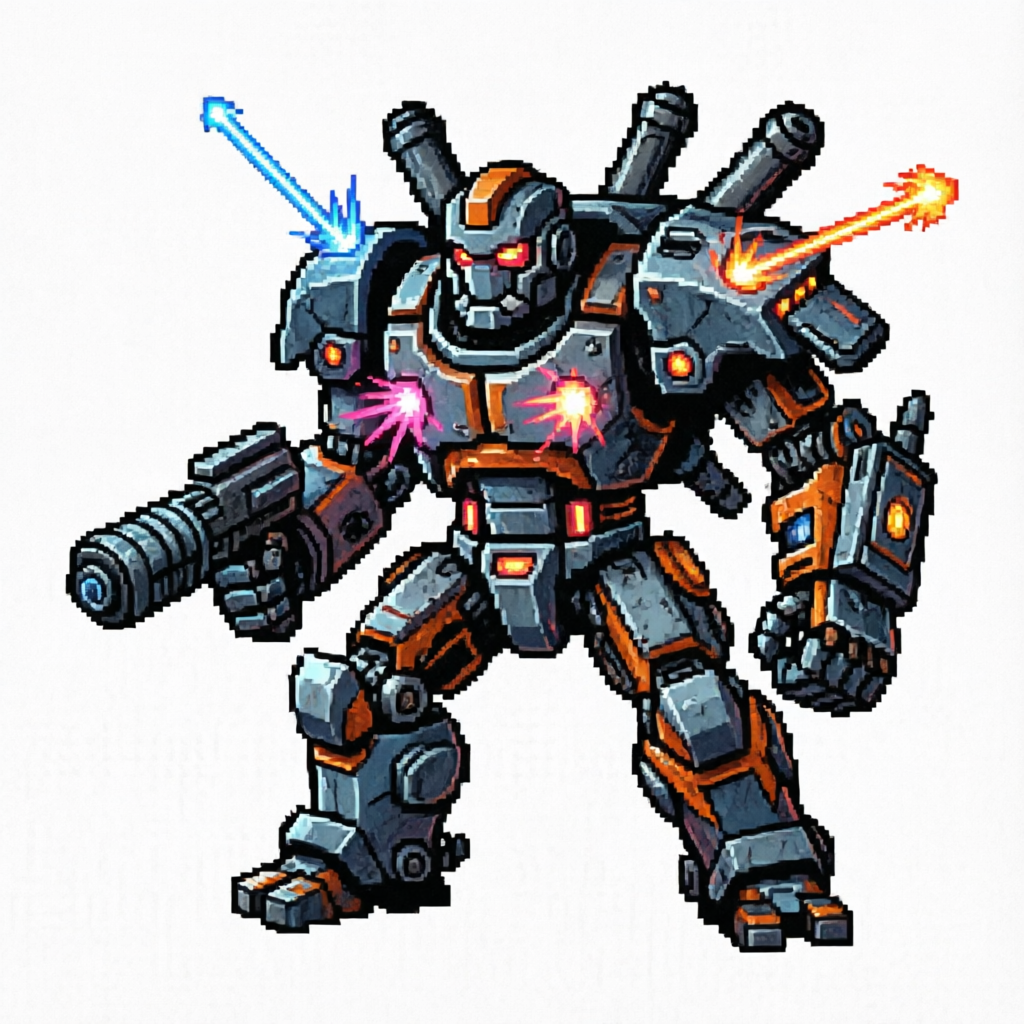
Build a Boss: Boss Design Fundamentals for Truly Unforgettable Encounters
Learn how to master build a boss boss design mechanics, structure multi-phase fights, telegraph attacks, and create balanced, memorable game encounters.
A great boss fight acts as both an emotional crescendo and a rigorous exam of everything a player has learned. When developers set out to build a boss boss design systems must harmonize visuals, pacing, player psychology, and combat mechanics into a seamless showdown. Without structured principles, even the most visually striking titan can dissolve into a frustrating slog or a forgettable button-masher. Mastering build a boss boss design methodology ensures your encounters feel tough yet fair, dramatic yet mechanically coherent.
Whether you are crafting an indie action-platformer or a sprawling role-playing game, understanding encounter architecture is critical. In this comprehensive guide, we will break down the essential steps to conceptualize, prototype, and balance pinnacle encounters from the ground up.
Core Archetypes: Finding the Right Identity
Before placing a single hitbox or coding an attack script, you must determine what role the encounter plays within your game's broader progression. Every iconic boss leans into an archetype that communicates expectations to the player instantly.
| Boss Archetype | Core Mechanical Focus | Primary Player Skill Tested | Classic Example Reference |
|---|---|---|---|
| The Duelist (Mirror Match) | Equal-footing combat, matching speed, parry/counter loops | Reaction time, frame recognition, spacing | Vergil (Devil May Cry) |
| The Behemoth (Colossus) | Massive reach, segmented body parts, environmental cover | Positioning, endurance, camera tracking | Darkeater Midir (Dark Souls III) |
| The Puzzle Master | Vulnerability windows, puzzle steps, hazard avoidance | Problem-solving under pressure, deduction | Psycho Mantis (Metal Gear Solid) |
| The Swarm Commander | Minion management, battlefield division, priority targeting | Crowd control, target prioritization | Renala (Elden Ring, Phase 1) |
| The Gimmick / Chaser | Movement mechanics, vehicular sequences, environmental cues | Spatial awareness, platforming precision | Leviathan (Dead Space) |
Choosing an archetype anchors your aesthetic and mechanical decisions. For example, if you build a duel-type encounter, wide visual arenas become secondary to crisp frame data, readable windups, and precise counter windows.
The 8-Beat Structural Flow of Boss Encounters
Veteran combat designers often break major encounters into sequential psychological beats. When studios approach modern game combat, breaking down the sequence helps avoid anti-climactic spikes or tedious bullet sponges. Industry design frameworks, such as those popularized by Game Developer's combat analysis, demonstrate how pacing turns a mechanical loop into an emotional narrative.
Intro Cutscene / Silhouette -> First Impression -> Probe & Learn -> Phase Shift -> Escalation -> Desperation -> The Climax -> Resolution
The Beat-by-Beat Encounter Matrix
| Phase Beat | Narrative & Emotional State | Combat Function | Balancing Rule of Thumb |
|---|---|---|---|
| 1. The Introduction | Intimidation, curiosity | Establishes scale, arena boundaries, and visual tone | Keep uninterruptible cinematics under 15 seconds. |
| 2. Opening Exchange | Neutral tension | Simple, clean attack patterns to teach telegraphs | Limit boss combo strings to 1–2 hits maximum. |
| 3. The Testing Ground | Player confidence rises | Mixes horizontal and vertical tracking attacks | Boss should punish panic-rolling or ability spamming. |
| 4. The Phase Shift | Shock, renewed stakes | Significant visual transformation or arena shift | Clear invulnerability/reset cues to prevent unfair hits. |
| 5. The Escalation | Pressure intensifies | Stacking mechanics (e.g., ground fire + targeted leaps) | Retain base telegraphs while altering recovery timing. |
| 6. The Desperation Loop | Pure adrenaline | Boss uses high-risk, high-reward ultimate abilities | Telegraphs become heavily exaggerated with large punish windows. |
| 7. The Climax | Peak execution | Executing learned mechanics under dwindling resources | Boss HP should deplete faster during final 15% to maintain speed. |
| 8. Resolution | Relief, catharsis | Rewarding victory animations, lore payoff, loot drops | Never kill the player with post-death lingering hazards. |
When you build a boss boss design blueprints require smooth transitions between these beats. Abrupt difficulty jumps shatter immersion, while drawn-out middle phases lead to player fatigue.
Telegraphs, Hitboxes, and Audio-Visual Cues
Fairness is the defining line between a challenging masterpiece and a frustrating failure. Players do not mind losing if they can clearly identify why they took damage and how to adjust their tactics next time.
Anatomy of an Attack Telegraph
Every boss offensive move should consist of three distinct time phases:
- Anticipation (Windup): Visual silhouette change, sound cue, particle charge, or weapon raise.
- Action (Active Frames): The collision strike, projectile release, or shockwave propagation.
- Recovery (Punish Window): Weapon retrieval, stumble, or cooldown idle allowing player retaliation.
| Attack Type | Windup Window (ms) | Visual Indicator Standard | Recommended Audio Cue |
|---|---|---|---|
| Standard Melee Strike | 400 – 650 ms | High weapon silhouette raise, backpedal step | Metallic scrape, quick breath inhale |
| Heavy Area-of-Effect (AoE) | 1000 – 1800 ms | Floor decaling, ground fissure glow, glowing aura | Deep bass rumble rising in pitch |
| Unblockable / Grab | 700 – 1100 ms | Red flash on weapon, distinctive stance shift | Sharp, dissonant sting or horn sound |
| Rapid Projectile Volley | 300 – 500 ms per shot | Muzzle flare, floating orbs tracking target | High-frequency chirps or charge hums |
| Lethal Screen-Wide Wipe | 3000 – 6000 ms | Arena-wide visual dimming, charge meter UI | Heavy ticking sound, ambient music dropout |
Whenever teams implement build a boss boss design systems in complex 3D environments, camera management must accompany attack cues. If a boss leaps off-screen, an automatic camera pan or an explicit shadow tracker on the arena floor prevents cheap, unseen damage.
Arena Architecture and Spatial Dynamics
A boss cannot be separated from the space in which the fight occurs. The arena should act as an active participant in combat rather than a flat, empty collision box.
+-------------------------------------------------------------+
|                        ARENA EDGE                           |
|      [Pillar / Cover]                 [Pillar / Cover]       |
|                                                             |
|                          BOSS                               |
|                         [Center]                            |
|                                                             |
|                      [Hazard Pool]                          |
|         PLAYER                                              |
|      [Spawn Point]                    [Pillar / Cover]       |
+-------------------------------------------------------------+
Arena Layouts and Tactical Implications
| Arena Structure | Strategic Benefits | Potential Player Frustrations | Best Archetype Match |
|---|---|---|---|
| Flat Circular Arena | Complete predictability, clean camera tracking | Can feel sterile without dynamic boss movement | Duelists, Pure Action Encounters |
| Multi-Tiered / Platforms | Encourages verticality, rewards mobility skills | Fall damage issues, off-screen attacks | Colossal beasts, flying entities |
| Destructible Cover | High tension; cover degrades as fight progresses | Camera collision clipping against debris | Ranged casters, artillery bosses |
| Shrinking Perimeter | Enforces tight pacing, prevents infinite kiting | Ring-outs can feel unearned if knockback is high | Enrage-timer bosses, fire beasts |
Community reports frequently highlight that arena hazards—such as bottomless pits or sudden lava surfaces—are most accepted when they affect both the player and the boss. If the player falls to their death from a basic knockback move, the encounter feels punitive rather than balanced.
Tuning and Balancing: The Quantitative Layer
Creating a balanced boss encounter requires continuous iterative testing. Using mathematical formulas gives you a reliable baseline for damage values, health pools, and encounter duration before playtesting begins.
Target Encounter Length Formulation
To set health and damage thresholds across difficulty tiers, designers often rely on encounter math:
Formel / Formula:
Effective Boss HP = Average Player DPS * Desired Combat Duration (seconds) * (1 - Boss Downtime Ratio)
Stat Tuning Reference Matrix
| Metric | Short Encounter (Skirmish) | Standard Story Boss | Hardcore / Endgame Boss |
|---|---|---|---|
| Target Duration | 90 – 150 seconds | 180 – 300 seconds | 360 – 600 seconds |
| Total Player Mistakes Allowed | 8 – 12 unmitigated hits | 5 – 7 unmitigated hits | 2 – 4 unmitigated hits |
| Phase Transition Points | Single phase or 50% shift | 66% and 33% breakpoints | Dynamic phases (e.g., 75%, 50%, 25%) |
| Attack Variety (Moveset) | 3 – 5 distinct actions | 6 – 9 distinct actions | 10 – 16 distinct actions |
| RNG Mitigation Window | Strict cooldowns on heavy moves | Dynamic weighted attack decks | Cooldowns modified by player proximity |
When balancing your build a boss boss design workflow, avoid relying on pure health scaling to simulate difficulty. Doubling health simply lengthens the duration of the fight without introducing new cognitive demands. Instead, tighten recovery windows, introduce mixed attack cadences, or modify arena space to elevate the challenge naturally.
Prototyping Checklist for Designers
Before investing time in high-poly 3D models, final textures, or recorded orchestral scores, test your combat loop with simple geometry (greyboxing). This guarantees that the encounter is engaging at its mechanical core.
- Greybox Arena: Establish boundaries, camera limits, and player sightlines using simple primitive shapes.
- Hitbox Accuracy: Ensure offensive and defensive hitboxes conform closely to visual models without lingering ghost frames.
- Color Contrast: Make sure attack cues contrast starkly with arena walls, floors, and background effects.
- Camera Anchoring: Test lock-on behaviors at the arena boundaries to eliminate clipping through walls.
- No-Damage Clear Test: Verify that an experienced player can defeat the boss without taking damage using standard equipment. If unavoidable damage exists, rework the telegraphs immediately.
- Telemetry Integration: Track where playtesters die, how long they survive in each phase, and which attacks deal the most damage.
By respecting these technical and psychological foundations, your efforts to build a boss boss design will culminate in encounters that players remember fondly for years.
Frequently Asked Questions (FAQ)
How many phases should a standard boss fight have?
Most successful boss encounters feature two to three phases. A single phase can feel repetitive if the encounter lasts longer than two minutes, whereas four or more phases risk fatiguing the player unless each phase drastically changes mechanics or arena settings.
What is the biggest mistake beginners make in build a boss boss design workflows?
The most common mistake is designing attacks without adequate recovery windows. When a boss chains unpunishable attacks back-to-back, players spend all their time dodging rather than engaging with combat systems. Fights must maintain a rhythmic give-and-take.
How do I prevent players from stunlocking or cheesing my boss?
Implement dynamic poise or posture meters. Instead of making the boss permanently immune to hit-stun or crowd control, allow status effects or interrupts to trigger only after specific thresholds are reached. Add a temporary hyper-armor recovery animation to reset the neutral state safely.
Should all bosses have unblockable attacks?
Not necessarily, but unblockable attacks are valuable tools for preventing players from relying exclusively on passive turtling behind shields or defensive barriers. If you use unblockable moves, make sure they feature distinct visual markers (such as a recognizable red flash) and generous windup times.
Related Guides
Build a Boss Custom Boss Guide: Advanced Mechanics, Stats, and Balancing
Master the mechanics of a build a boss custom boss setup. Learn formulas, scaling stats, ability scripting, and balance tips for epic multiplayer battles.
Build a Boss: Boss Ideas and Encounter Mechanics for Epic Battles
Level up your game design with our guide to build a boss. Explore creative boss ideas, multi-phase mechanics, telegraphed attacks, and encounter designs.
How to Build a Boss Boss Battle: The Complete Game Mechanics Guide
Learn how to build a boss boss battle with expert pacing, telegraphing, multi-phase structures, and combat mechanics that captivate players.
How to Build a Boss Custom Boss Fight: Mechanics, Balancing, and Creation Guide
Learn how to build a boss custom boss fight from scratch. Master attack patterns, phase transitions, visual telegraphs, and playtesting mechanics.