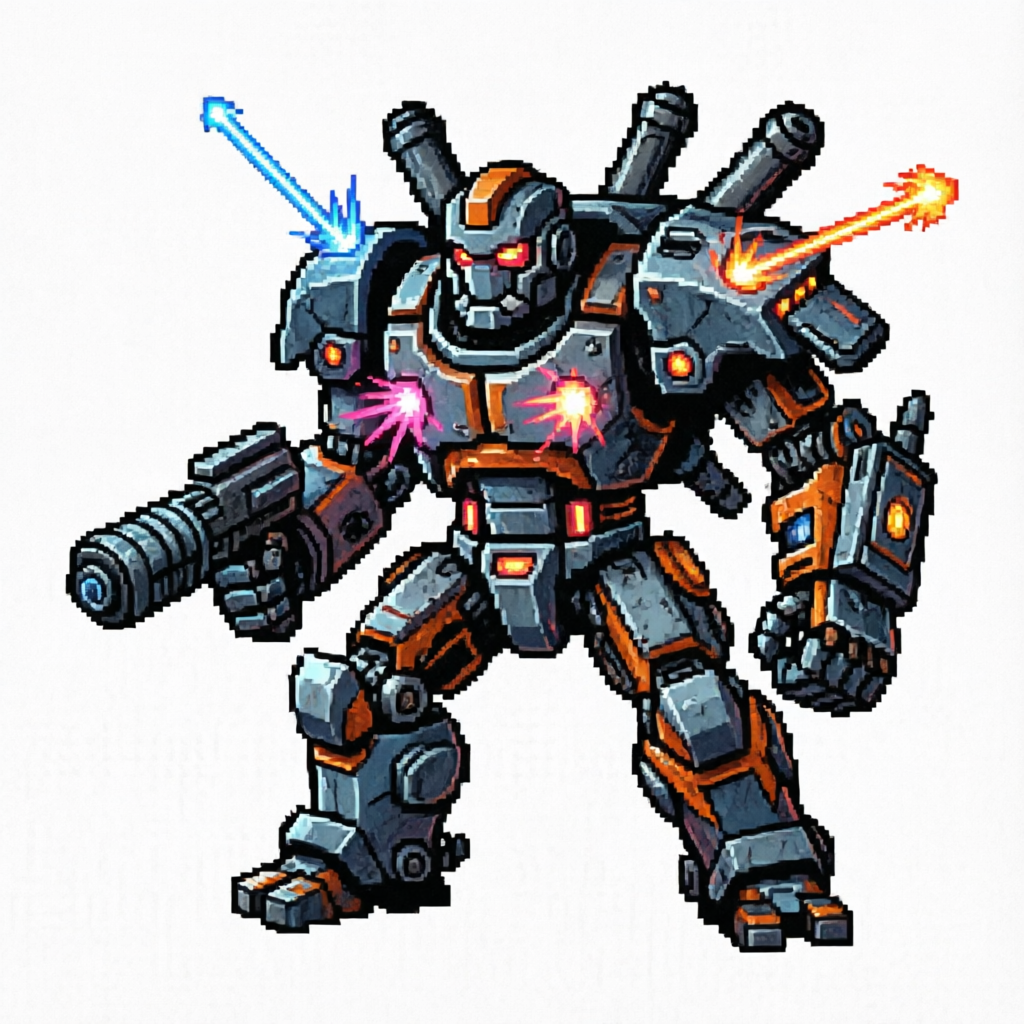
Build a Boss: Boss Ideas and Encounter Mechanics for Epic Battles
Level up your game design with our guide to build a boss. Explore creative boss ideas, multi-phase mechanics, telegraphed attacks, and encounter designs.
Every great game hinges on memorable showdowns, which is why learning how to build a boss from scratch is an essential skill for any designer or dungeon master. When you sit down to develop fresh build a boss boss ideas, you are not just drafting big stat blocks; you are engineering emotional climaxes that test player mastery and team coordination. Without deliberate planning, a confrontation turns into a tedious grind rather than a pulse-pounding spectacle.
By deconstructing phase transitions, environmental hazards, telegraphing mechanics, and behavioral logic, you can turn simple encounters into legendary spectacles. Whether you are building an action RPG, an indie platformer, or running a tabletop campaign, this deep dive provides actionable frameworks, concrete templates, and balanced archetypes to bring your encounter visions to life.
Core Archetypes: Finding the Right Foundation
Before sculpting abilities or designing visual assets, you must settle on a fundamental role for your adversary. Great encounters balance familiar combat patterns with bespoke twists. Player experience demonstrates that encounters feel best when the boss clearly communicates its combat identity from the very opening seconds.
| Archetype | Primary Focus | Player Counterplay | Common Trap to Avoid |
|---|---|---|---|
| The Juggernaut | High effective HP, heavy damage, slow swings | Positioning, spacing, kiting | Turning the fight into a boring damage sponge |
| The Duelist | High mobility, parrying, counterattacks | Timing windows, baiting strikes, precision | Giving the boss unreactable instant attacks |
| The Commander | Summons minions, provides buffs, controls space | Crowd control, target prioritization | Flooding the screen until it causes visual clutter |
| The Trickster | Illusions, stealth, teleportation, traps | Observation, true-sight tools, area denial | Making invulnerability windows drag on too long |
| The Colossus | Multi-part arena hazard, weak-point focus | Climbing, staged objectives, siege weapons | Stiff animations that make hitbox detection clunky |
Selecting an archetype guides your early design choices. For instance, a Juggernaut requires wide, clearly telegraphed swings that force players to scramble across the room, whereas a Duelist demands tight dodge timings or precise rhythm counters. Mixing two complementary archetypes—such as a Commander who shifts into a Duelist when cornered—keeps experienced players guessing.
The Four-Pillar Framework to Build a Boss
When designers want to build a boss, they often start with wild aesthetic concepts instead of concrete gameplay loops. To avoid chaotic, frustrating battles, structure your encounter around four foundational pillars: Motivation, Mechanics, Arena, and Pacing.
       [ Motivation & Narrative Theme ]
                     │
       [ Core Mechanics & Telegraphs ]
                     │
       [ Arena Dynamics & Cover System ]
                     │
       [ Pacing, Phasing & Climax Engine ]
1. Narrative Theme and Motivation
A boss should never exist in a vacuum. Why is this entity fighting here? What are they defending, or what do they desperately fear losing? An ancient sentinel protecting a crumbling vault fights with duty-bound, mechanical discipline, whereas a dying warlord fights with savage desperation.
2. Signature Mechanical Identity
Every encounter needs a "hook"—a distinct mechanic that sets it apart from standard encounters. If your combat relies heavily on status ailments, your boss might manipulate those statuses, detonating them or absorbing them to heal.
3. Dynamic Arenas
The room itself should be an active participant. Flat, static rooms make even high-concept bosses feel like generic target dummies. Pillars that provide cover, pit hazards, shifting elevators, or dynamic water levels dramatically expand tactical choices.
4. Pacing and Intensity Escalation
A fight should build toward a fever pitch. If a boss uses all its strongest skills in the first ten seconds, the remainder of the encounter becomes an anticlimax. Hold critical abilities in reserve to create shocking phase revelations.
Multi-Phase Design: Blueprinting Phase Transitions
A single static health bar rarely sustains excitement across a multi-minute battle. Multi-phase encounters break combat into escalating acts, demanding adaptable strategies from players. When brainstorming creative build a boss boss ideas, consider how physical deterioration, arena collapse, or emotional rage shifts the dynamic.
| Phase | Encounter State | Boss Behavior | Arena Condition | Player Goal |
|---|---|---|---|---|
| Phase 1: The Test | 100% – 70% HP | Standard move pool, heavy telegraphs, testing patterns | Clean layout, full cover intact | Learn rhythms and observe safe zones |
| Phase 2: The Escalation | 70% – 30% HP | Adds arena hazards, introduces minion waves or faster combos | Partial cover destroyed, hazardous zones ignite | Adapt to restricted movement, prioritize targets |
| Phase 3: The Desperation | 30% – 0% HP | Enrage mechanics, shorter telegraphs, massive area attacks | Total arena collapse or shrinking perimeter | High DPS burn, precise resource management |
Designing Meaningful Transitions
Never transition phases with a simple invisible damage stop that eats player resources for nothing. Provide clear sensory feedback:
- Audio Cues: Distinct musical shifts, voice lines, or weapon transformation sounds.
- Visual Metamorphosis: Armor shatters, wings unfold, or the boss abandons their primary weapon for savage unarmed strikes.
- Mechanical Inversion: A boss that spent the opening round hiding behind heavy shields might discard the shield entirely to dual-wield weapons at double the speed.
Industry analyses featured on Game Developer frequently emphasize that player frustration stems not from high difficulty, but from unfairness. Providing clear transition windows ensures players understand that the rules of engagement have evolved.
5 Innovative Build a Boss Boss Ideas
If you need immediate inspiration for your next project or game session, these ready-to-use encounter concepts blend arena dynamics, phase escalation, and tight combat logic.
+-------------------+--------------------+-----------------------+
|  The Mirror-King  |  The Clockwork Sun | The Fungal Behemoth   |
| (Deception/Clones)| (Light/Shadow Safe)| (Spores & Arena Denial|
+-------------------+--------------------+-----------------------+
1. The Mirror-King (The Illusionist & Arena Siphon)
- Concept: A narcissistic sorcerer who lives inside towering crystalline pillars around the room.
- Core Gimmick: When damaged, the boss fractures into three identical reflections. Only the reflection casting a true shadow takes actual damage; striking a false reflection triggers a room-wide retaliatory pulse.
- Phase Transition: At 30% health, the real boss shatters all surrounding mirrors, covering the floor in glass hazards that punish rapid dashing while empowering their own speed.
2. The Clockwork Sun (Environmental Mechanics)
- Concept: A suspended, mechanical core maintained by automated repair arms.
- Core Gimmick: The central apparatus pulses with radiant solar energy every 45 seconds. Players must manipulate rotating stone blast doors to cast defensive shadows. Standing exposed causes stacking burn damage.
- Phase Transition: When heavily damaged, the core plummets to the ground, detaching mechanical limbs to pursue players directly while shooting spinning laser beams across the floor.
3. The Parasitic Behemoth (Resource Corruption)
- Concept: An enormous subterranean beast controlled by a glowing fungal growth on its back.
- Core Gimmick: The boss periodically blankets zones of the arena in toxic spores. Players caught in the haze have their healing inverted—healing potions or spells deal poison damage until cleansed with clear water springs dotted across the room.
- Phase Transition: The host creature falls lifeless, and the fungal parasite detaches into a fast-skittering entity that tries to latch onto players to drain their health pools.
4. The Bell-Ringer Knight (Rhythm & Sound Wave Attacks)
- Concept: A towering knight in heavy plate armor wielding a colossal bronze bell as a warhammer.
- Core Gimmick: Each ground slam sends out concentric sonic rings that must be jumped over or parried. Strikes against the boss ring the bell, adding resonance charges that release massive concussive blasts if not staggered.
- Phase Transition: The bell cracks open, unleashing trapped, wailing spirits that patrol the outer rim, shrinking the combat area and demanding hyper-focused melee trades.
5. The Gravity Weaver (Dynamic Movement & Aerial Play)
- Concept: An ancient celestial architect floating over a void.
- Core Gimmick: The boss manipulates localized gravity fields. Platforms rise and fall in the abyss, and players must leap between floating masonry chunks while avoiding anti-gravity anomalies that invert their controls or launch them skyward.
- Phase Transition: Gravity inverts completely; the ceiling becomes the floor, collapsing old cover and forcing players to navigate newly exposed structural beams.
Boss Ability Design: Attack Telegraphing and Counterplay
When you design skills to build a boss, telegraphing determines whether a battle feels fair or cheap. A telegraph is a warning signal—visual, auditory, or environmental—that alerts the player to an incoming attack and implies the correct defensive response.
| Telegraph Indicator | Sensory Type | Player Read | Required Counterplay |
|---|---|---|---|
| High Overhead Weapon Raise | Visual (Slow motion) | Devastating vertical crushing strike | Roll laterally or sidestep |
| Scraping Weapon on Ground | Audio & Spark VFX | Sweeping circular cleave incoming | Backstep out of range or jump over blade |
| Ground Decal (Red/Runic Circle) | Environmental Decal | Delayed area explosion | Clear the zone immediately |
| Sharp Retinal Glint / Audio Ping | Visual / Sound Stinger | Instant piercing thrust or sniper projectile | Dodge at the exact moment of sound release |
| Deep Inhale / Chest Glow | Visual & Sub-bass Rumble | Full-screen frontal breath weapon | Break line of sight behind solid pillars |
Implementing Risk vs. Reward Attack Windows
A well-designed attack leaves an opening. When an adversary unleashes their most devastating combination, they should suffer brief recovery frames—exhaustion, a weapon stuck in the earth, or an overheating core. These windows reward players who successfully evade the onslaught, providing a clear beat to unleash burst damage.
Balanced Encounter Metrics: Math Behind the Fight
Designing compelling build a boss boss ideas requires solid internal math. An encounter that drags on past ten minutes without significant narrative developments often induces mechanical fatigue. Use this reference table to balance encounter pacing across typical role-playing or action systems:
| Game Encounter Scale | Target Duration | Average Boss HP Multiplier | Action Economy vs. Players | Recommended Add Waves |
|---|---|---|---|---|
| Dungeon Mini-Boss | 2 – 4 Minutes | 3x – 5x Single Player Pool | 1:1 Actions (Standard turns) | 0 – 1 Minor Spawns |
| Zone Climax Boss | 5 – 7 Minutes | 8x – 12x Single Player Pool | 2:1 Actions (Legendary / Extra actions) | 1 – 2 Coordinated Waves |
| Campaign / Final Boss | 8 – 12 Minutes | 15x – 25x Single Player Pool | 3:1 Actions (Reactions + Environmental) | 2 – 3 Strategic Add Phases |
Action Economy and Anti-Stun Measures
In team-based tabletop games and cooperative action games, the player side possesses a massive advantage in actions per round. If four players each take an action while a boss takes only one, the boss is overwhelmed quickly.
- Legendary / Off-Turn Actions: Allow the boss to act between player turns to disrupt crowd control and maintain board pressure.
- Tenacity Buffs: Prevent players from locking down your boss with permanent stuns or freezes by granting escalating resistance to repeated crowd control effects.
Playtesting Checklist: Refining the Battle
Before you finalize your design to build a boss, put the prototype through this quality assurance checklist to catch pacing and balance flaws early:
- Clear Win/Loss Conditions: Can players tell why they took damage, or does it feel random?
- Colorblind & Audio Accessibility: Are ground attack indicators visible across all color profiles, and do major attacks feature both audio and visual tells?
- No Unavoidable Damage: Can a skilled player theoretically defeat the boss without taking damage through perfect positioning and timing?
- Resilient to Exploits: Does the boss have behavioral answers for players standing in unreachable high spots or sniping outside arena bounds?
- Phase Variety: Does Phase 3 feel distinctly different from Phase 1, or did the boss simply gain a red aura and extra attack power?
Frequently Asked Questions
How do I make a solo boss challenging without simply adding more health?
To make a solo encounter challenging, enhance the boss's action economy and spatial control rather than inflating its hit points. Implement reactions, multi-target cleaves, disruptive mobility skills, and dynamic arena hazards that force players to reposition constantly. This maintains relentless pressure without turning the battle into an exhausting chore.
What is the most common mistake when creators build a boss?
The most frequent mistake is neglecting player counterplay and attack telegraphing. When a boss executes instantaneous, massive attacks without visual or audio cues, players feel cheated rather than outplayed. Every high-damage attack must feature a distinct preparatory animation or sound that gives attentive players time to dodge, block, or seek cover.
How many phases should a standard boss encounter have?
For most video games and tabletop sessions, two to three distinct phases represent the sweet spot. A two-phase fight allows an opening phase to teach mechanics, followed by an escalated second phase that tests mastery. Three phases work well for climatic, narrative-heavy endbosses. Anything beyond four phases risks fatiguing players unless the arena or mechanics change completely between acts.
Where can I find more build a boss boss ideas for diverse game genres?
Look outside your specific genre for fresh mechanics. Turn-based RPG designers can draw inspiration from bullet-hell attack patterns, while action combat designers can adapt puzzle mechanics, environmental hazards, and riddle challenges from classic adventure games. Deconstructing what makes iconic encounters memorable in games like Dark Souls, Monster Hunter, or World of Warcraft will fuel endless custom creations.
Related Guides
Build a Boss Custom Boss Guide: Advanced Mechanics, Stats, and Balancing
Master the mechanics of a build a boss custom boss setup. Learn formulas, scaling stats, ability scripting, and balance tips for epic multiplayer battles.
Build a Boss: Boss Design Fundamentals for Truly Unforgettable Encounters
Learn how to master build a boss boss design mechanics, structure multi-phase fights, telegraph attacks, and create balanced, memorable game encounters.
How to Build a Boss Boss Battle: The Complete Game Mechanics Guide
Learn how to build a boss boss battle with expert pacing, telegraphing, multi-phase structures, and combat mechanics that captivate players.
How to Build a Boss Custom Boss Fight: Mechanics, Balancing, and Creation Guide
Learn how to build a boss custom boss fight from scratch. Master attack patterns, phase transitions, visual telegraphs, and playtesting mechanics.