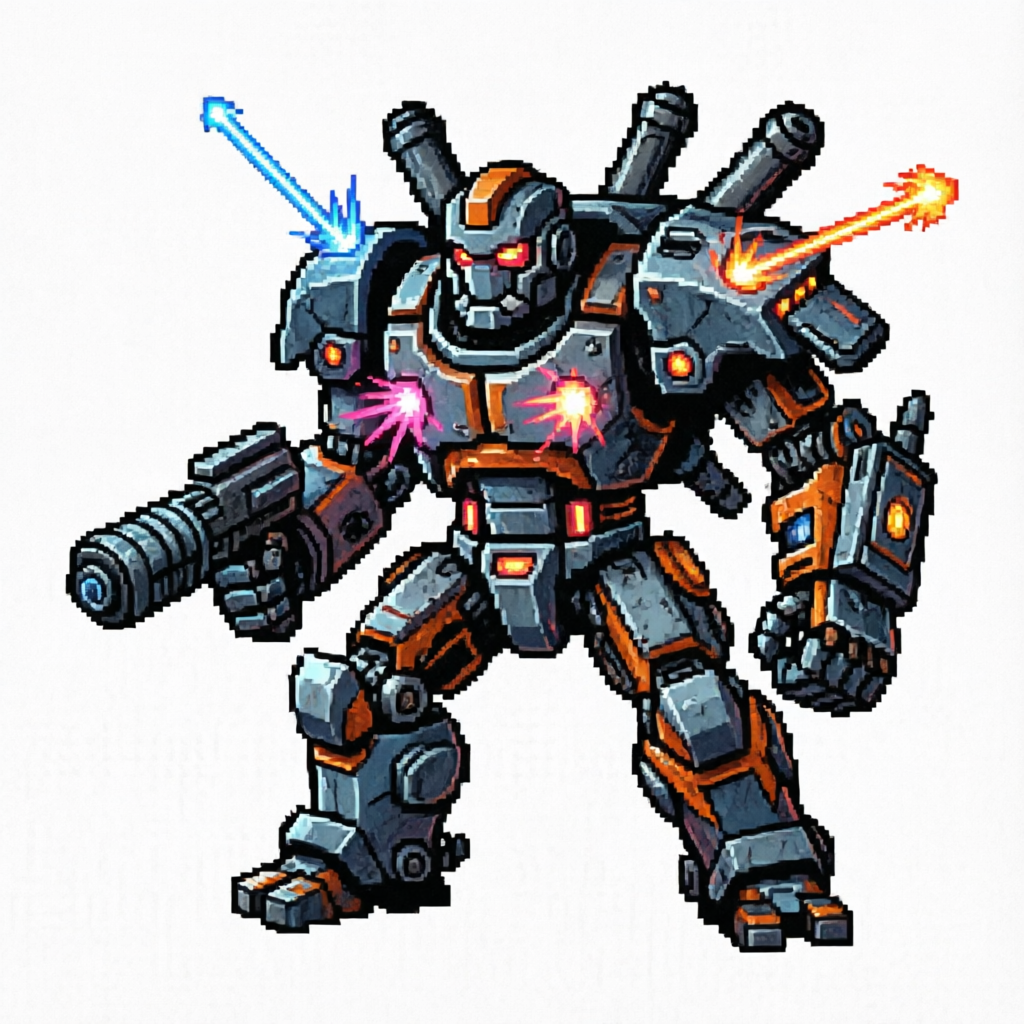
How to Build a Boss: Boss Fights Design Guide and Mechanics
Learn how to build a boss and design epic boss fights with proven mechanics, phase transitions, action economy tips, and arena balancing frameworks.
Every memorable gaming experience relies on climactic showdowns that test everything the player has learned. When developers and tabletop masters set out to build a boss, boss fights transform from standard combat encounters into defining emotional milestones. Learning how to properly build a boss, boss fights that challenge without frustrating requires a deep understanding of pacing, telegraphing, and combat symmetry.
Whether you are designing a digital action RPG or running a tactical tabletop campaign, great encounters don't happen by accident. They are engineered through precise mechanics, thematic coherence, and dynamic phases.
Core Pillars of Memorable Boss Encounter Design
At its core, a boss encounter acts as a comprehensive exam. It evaluates whether the player has mastered the movement mechanics, defensive options, and offensive systems introduced throughout earlier stages. If a mechanic was never taught, forcing it during a climactic showdown feels cheap rather than exhilarating.
Industry veterans dissecting combat design often emphasize structural tension. Game designer Mike Stout famously broke down encounter architecture into distinct beats that build, peak, and resolve tension in a rhythmic loop. According to deep dives on Game Developer's combat design analysis, a well-paced encounter balances vulnerability windows with high-threat maneuvers to avoid player fatigue.
To successfully execute this balance, designers focus on four core pillars:
- Anticipation and Telegraphing: Every devastating attack must feature a distinct visual, audio, or spatial wind-up.
- Action Economy Balance: Single entities naturally suffer against grouped opponents unless supplemented by legendary actions, automated reactions, or minion waves.
- Spatial Awareness: The battlefield must evolve alongside the adversary, utilizing hazards, cover, and dynamic boundaries.
- Mechanical Escalation: The fight should increase in tempo, introducing variations of known attacks rather than completely disconnected mechanics late in the battle.
The Four Boss Archetypes and Combat Roles
Before assigning health pools and damage values, you must determine what archetype your boss fulfills. Each archetype communicates distinct expectations to players regarding positioning, damage windows, and movement speed.
| Archetype | Primary Attribute | Signature Behaviors | Player Counterplay |
|---|---|---|---|
| The Juggernaut | Massive HP & Hyper-Armor | Slow, screen-clearing swipes, sweeping slams, environmental destruction | Precise dodge timing, baiting recovery animations, chip damage |
| The Duelist | High Agility & Parry Systems | Counter-attacks, feints, gap-closers, hit-and-run combos | Deflection, rhythm matching, punishing missed lunges |
| The Puppeteer | Area Denial & Summoning | Spawning adds, placing traps, shielding self behind obstacles | Priority target focus, crowd control, mobility tools |
| The Colossus | Puzzle-Platforming & Weakpoints | Climbable limbs, phased invulnerability, environmental interaction | Locating runes/nodes, utilizing grapples, timing strike phases |
When you plan to build a boss, boss fights gain structural clarity once you select one dominant archetype or blend two complementary roles (such as a Juggernaut that shifts into a mobile Duelist during its final stand).
Balancing the Action Economy: Solos vs. Parties
The single most common pitfall when creators build a boss for boss fights is ignoring the action economy. In both turn-based tactical games and real-time combat systems, four players taking four actions per round will rapidly overwhelm a lone enemy who only acts once.
Player Party Output: [Attack] + [Buff] + [Crowd Control] + [Heal]
Lone Boss Output:     [Attack] -> Overwhelmed by turn disparity
To prevent players from stun-locking or bursting down the encounter in seconds, incorporate compensatory mechanics:
1. Off-Turn Triggers & Reactions
Grant the boss the ability to reposition or retaliate immediately after a player concludes their turn or unleashes a high-damage combo.
2. Strategic Minion Integration
Minions should never simply be damage sponges. Give them clear tactical roles, such as shielding the boss, projecting auras that negate player dodges, or forcing ranged combatants out of safe positions.
3. Crowd-Control Resistance
Flat immunities make player abilities feel useless. Instead, implement a "break gauge" or "threshold resistance" system where status effects stagger the boss momentarily rather than shutting down the fight entirely.
| Combat Factor | Unbalanced Boss (Common Pitfalls) | Balanced Encounter Mechanics |
|---|---|---|
| Turn Frequency | Acts once every 4 player turns | Retaliates after specific hits; uses environmental actions |
| Status Effects | Completely immune or perma-stunned | Break meters; status conditions reduce posture instead of hard stunning |
| Target Priority | Mindlessly targets closest tank | Rotates focus via threat meters, proximity checks, or targeted debuffs |
| Area Influence | Limited to single-target melee hits | Cleaves, directional shockwaves, and ambient floor hazards |
Phase Transitions and Tension Escalation
A fight that remains static across a ten-minute engagement causes adrenaline to dip. Dividing the battle into distinct phases maintains player engagement and tells a story of increasing desperation.
When you build a boss, boss fights thrive on dramatic checkpoints. These transitions alter the rules of engagement, forcing the player to adapt on the fly.
| Phase Level | Health Threshold | Arena State | Attack Pacing | Mechanical Shift |
|---|---|---|---|---|
| Phase 1: Neutral | 100% – 70% | Pristine, standard boundaries | Methodical, wide wind-ups | Introduces baseline mechanics and dodge timings |
| Phase 2: Escalation | 70% – 30% | Partial cover destroyed, floor hazards appear | Increased combo chains, reduced recovery frames | Mixes existing attacks; summons specialized adds |
| Phase 3: Desperation | 30% – 0% | Collapsed walls, continuous environmental pressure | Relentless aggression, ultimate attacks unleashed | Tightened punish windows; high risk/reward execution |
Designing Clean "Phase Changes"
- Clear Signaling: Give the boss a dramatic invulnerability or transition animation (e.g., wings unfurling, roaring, shattering armor) to communicate that the rules have changed.
- Do Not Punish Player Resources: Avoid resetting combat states unfairly. If a player just applied a major damage-over-time effect, consider letting it carry over or instantly trigger its payout during the transition.
- Environmental Adaptation: Force movement by having the boss destroy pillars, flood sections of the arena with lava, or pull the combatants into an alternate dimension.
Arena Design: The Unsung Second Combatant
A flat, rectangular room turns an epic duel into a spreadsheet calculation. The terrain should actively interact with the boss's kit and offer tactical utility to the player.
When structuring the encounter zone, balance player advantage against boss mobility:
| Arena Element | Defensive Purpose (Player) | Offensive Purpose (Boss) | Design Caution |
|---|---|---|---|
| Breakable Pillars | Line-of-sight breaking for heals | Charge targets that stun the boss or cause debris damage | Ensure players know structures are destructible |
| Elevated Ledges | Vantage point for ranged snipers | Shockwave launchpads or targets for sweeping swipes | Keep traversal snappy so players don't get trapped |
| Environmental Hazards | Chokepoints to trap summons | Area denial forcing players out of camping spots | Never introduce instant-death pits without ample warning |
| Dynamic Light/Shadow | Visual stealth to shake aggro | Conceals stealth lunges or ambush mechanics | Avoid visual clutter that obscures attack wind-ups |
Playtesting and Pacing Checklists
Player experience and community reports consistently show that what feels "challenging" on paper often feels "unfair" in practice. Iterative playtesting is the only reliable way to calibrate numbers against human reaction times.
Use this checklist during tuning sessions:
Telegraphing & Fairness
- Is every lethal strike preceded by at least 0.5 to 1.5 seconds of distinct wind-up animation or sound cue?
- Are hitboxes strictly aligned with visual effects, avoiding phantom damage?
- Does the player have a reliable counter-action (block, parry, jump, dodge roll, or cover)?
Progression & Feedback
- Does the boss visually reflect damage taken (cracked plating, sparks, labored breathing)?
- Are health checkpoints achievable without requiring frame-perfect execution on normal difficulties?
- When players wipe, can they pinpoint the exact mistake that led to defeat?
Taking the time to rigorously analyze these elements ensures that every time you build a boss, boss fights leave players feeling accomplished rather than cheated.
Frequently Asked Questions
What makes a boss fight feel unfair rather than challenging?
A fight feels unfair when damage occurs without readable telegraphs, hitboxes extend beyond character models, or camera angles obscure critical attacks. True challenge gives players all the information needed to react, placing failure solely on execution or decision-making.
How many phases should a standard boss fight have?
Most successful boss encounters feature two to three phases. A two-phase fight establishes fundamentals and then accelerates the pace. A three-phase fight typically introduces a standard state, an escalated state with arena hazards, and a short, high-tension desperation phase.
How do you balance boss fights for solo players versus co-op squads?
When you build a boss, boss fights tailored for groups require dynamic scaling. Increase health pools moderately, reduce recovery windows between attacks, and incorporate area-of-effect cleaves or split-aggro mechanics so the boss can threaten multiple players simultaneously without relying on one-shot mechanics.
Related Guides
Build a Boss Custom Boss Guide: Advanced Mechanics, Stats, and Balancing
Master the mechanics of a build a boss custom boss setup. Learn formulas, scaling stats, ability scripting, and balance tips for epic multiplayer battles.
Build a Boss: Boss Design Fundamentals for Truly Unforgettable Encounters
Learn how to master build a boss boss design mechanics, structure multi-phase fights, telegraph attacks, and create balanced, memorable game encounters.
Build a Boss: Boss Ideas and Encounter Mechanics for Epic Battles
Level up your game design with our guide to build a boss. Explore creative boss ideas, multi-phase mechanics, telegraphed attacks, and encounter designs.
How to Build a Boss Boss Battle: The Complete Game Mechanics Guide
Learn how to build a boss boss battle with expert pacing, telegraphing, multi-phase structures, and combat mechanics that captivate players.