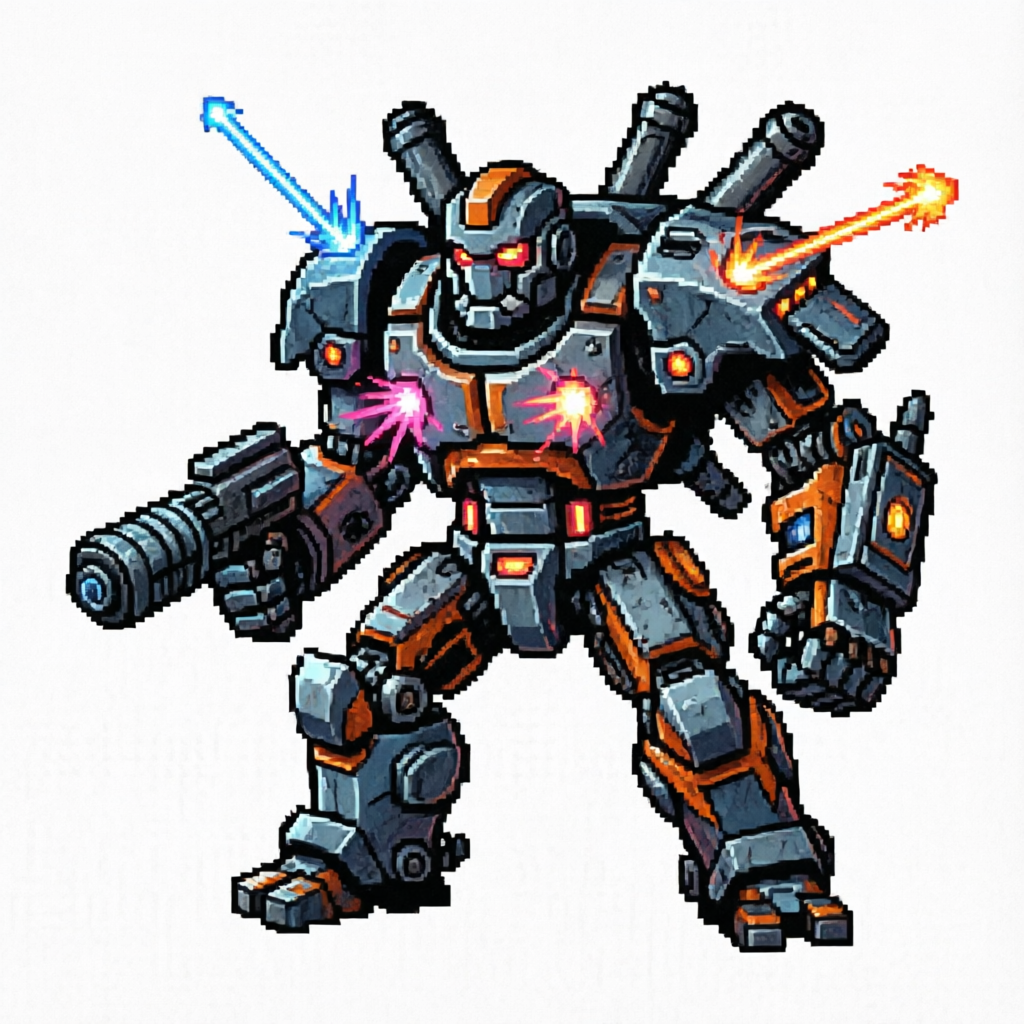
Build a Boss: How to Make a Boss Fight That Keeps Players Hooked
Learn how to build a boss and craft memorable boss encounters. Explore pacing, telegraphing, arenas, and phase-based combat design.
Every iconic game moment hinges on a climactic showdown that tests everything the player has learned up to that point. When you sit down to build a boss how to make a boss fight stand out from ordinary mob combat requires a deep understanding of pacing, psychology, and mechanical fairness. Learning to build a boss how to make a boss fight feel thrilling rather than frustrating is one of the most rewarding skills you can develop as a creator, whether you work in Unity, Unreal Engine, Godot, or Roblox.
Without clear intent, an encounter can quickly degenerate into a tedious damage-sponge marathon. Great encounters balance tension, visual clarity, and escalating stakes to deliver an unforgettable climax. Let's break down the foundational principles, design frameworks, and technical building blocks required to craft legendary encounters.
The Core Foundations of Memorable Boss Encounters
Before touching an engine or scripting any behavior, you must define the encounter's emotional core and pedagogical purpose. A great boss functions as an exam: it evaluates the player's mastery of specific mechanics taught throughout the preceding level. If your level emphasized parrying and vertical movement, your encounter should demand those exact skills.
According to veteran creators, the most common trap is designing an adversary purely around aesthetic shock value. A massive dragon or towering mech looks impressive, but if it lacks coherent rhythm, the encounter quickly falls flat. To ensure a solid foundation, establish your design pillars early.
| Design Pillar | Primary Purpose | Player Experience Goal | Common Pitfall to Avoid |
|---|---|---|---|
| Mechanical Test | Evaluates mastery of recent abilities | Feeling of earned progression and growth | Testing unintroduced mechanics abruptly |
| Pacing & Tension | Builds dramatic rhythm through shifts | Adrenaline rush paired with breathing room | Nonstop aggression with zero recovery windows |
| Visual Legibility | Communicates threats and vulnerabilities | Fair, readable gameplay without cheap deaths | Particle clutter obscuring strike hitboxes |
| Narrative Payoff | Resolves or heightens story conflict | Emotional investment in defeating the foe | Random encounters with no thematic buildup |
According to design guidelines outlined on Game Developer, a boss battle functions best when it translates story stakes into mechanical pressure. Anticipation matters just as much as execution; foreshadowing an impending encounter through lore, environmental destruction, and audio cues builds palpable dread long before health bars appear.
Deconstructing Combat Loops: Windup, Strike, and Recovery
Every attack in a boss's arsenal must follow a readable three-beat rhythm: windup (telegraph), active strike (execution), and recovery (vulnerability). Breaking this cadence results in mechanics that feel unresponsive or unfair.
When you build a boss how to make a boss fight intuitive relies heavily on how generous your telegraphing is. If a sweeping attack inflicts 80% of a character's health pool, the telegraph must be unmistakable, utilizing distinct silhouette shifts, sound cues, and ground-projected indicators.
| Attack Phase | Frame / Time Window | Purpose for Boss | Player Counterplay Opportunity |
|---|---|---|---|
| Telegraph (Windup) | 0.4s – 1.2s | Signals attack type, range, and direction | Position out of range, prepare block/parry, or dodge |
| Active (Strike) | 0.05s – 0.25s | Delivers hitbox collision and damage | Execute precise evasion frames or timed counters |
| Recovery (Cooldown) | 0.5s – 1.8s | Resets animation state and idle posture | Punish boss with heavy attacks, heal, or reposition |
Player experience shared across indie developer forums reveals that artificial difficulty often stems from cut recovery frames rather than complex patterns. Players love dodging intricate bullet hell patterns or brutal combos, provided they receive clear windows to retaliate afterward.
Structuring Dynamic Multi-Phase Encounters
Single-phase encounters risk becoming predictable once the player decodes the initial loop. Introducing phased transitions keeps the engagement fresh by forcing players to adapt on the fly. As the enemy takes damage, alter their attack patterns, modify the terrain, or introduce supporting threats.
[Phase 1: Baseline Testing]
       │
       ▼ (Health drops below 70%)
[Phase 2: Escalation & Arena Hazard]
       │
       ▼ (Health drops below 30%)
[Phase 3: Desperation / Enrage State]
When structuring transitions as you build a boss how to make a boss fight dynamic, avoid using hard invulnerability shields without gameplay engagement. If the boss shields up, force the player to solve a puzzle, destroy environmental power nodes, or clear specialized minions to break the barrier.
| Phase Tier | Health Threshold | Boss Behavior Modifier | Arena Changes | Threat Level |
|---|---|---|---|---|
| Phase 1 | 100% – 70% | Standard 3-hit combos, long telegraphs | Clean room, full mobility available | Moderate |
| Phase 2 | 70% – 30% | Faster combos, projectile additions, gap-closers | Outer ring crumbles; floor hazards spawn | High |
| Phase 3 | 30% – 0% | Desperation moves, enrage timers, shortened recovery | Restricted arena size, persistent environmental damage | Severe |
Community reports from competitive raid groups indicate that Phase 3 encounters feel most thrilling when the enemy's moveset intensifies without feeling mathematically impossible. Rather than simply doubling enemy attack values, speed up attack intervals slightly or layer two familiar attacks together to create brand-new puzzle scenarios.
Arena Geometry and Environmental Storytelling
An arena is not just a flat box; it is an active participant in combat. Level geometry should complement the boss's strengths while giving players defensive opportunities. A lumbering behemoth becomes vastly more engaging when the arena features destructible pillars that players can use to block charging attacks.
Consider how the physical space interacts with movement mechanics:
- Cover Mechanics: Destructible barriers allow strategic breathing room, but degrade over time to prevent camping.
- Verticality: Elevation shifts, ramps, and grapple points let mobile classes bypass area-of-effect (AoE) ground hazards.
- Environmental Traps: Interactive hazards, such as ceiling stalactites or explosive vents, give players alternative ways to deal heavy burst damage.
- Boundary Shrinkage: Slowly closing walls or lava surges prevent passive stalling during final phases.
Designing the space thoughtfully ensures that when you build a boss how to make a boss fight memorable, the arena reinforces the dramatic tension. A crumbling cathedral platform floating over an abyss inherently raises stakes faster than an empty warehouse room.
Technical Implementation: AI States and Animation Setup
From a technical standpoint, managing boss AI requires a robust State Machine or Behavior Tree. The enemy must fluidly alternate between wandering, targeting, executing attacks, entering stuns, and triggering phase transitions without getting locked in infinite loops.
In engines like Roblox Studio, Unreal, or Unity, a standard humanoid boss requires an Animator setup tied to custom state logic. For instance, developers frequently script an Animate controller alongside explicit state checks to handle interruptible versus uninterruptible attack animations.
| State Name | Trigger Condition | Primary Action | Transition Out Condition |
|---|---|---|---|
| Idle / Reposition | Target is out of melee range | Circles player, pathfinds, checks line-of-sight | Target enters range OR ability cooldown finishes |
| Combo Attack | Within 4–6 meters | Executes programmed attack sequence | Combo completes OR boss receives heavy stagger |
| Ranged Projectile | Target maintains long distance | Fires tracking or skillshot projectiles | Target closes gap OR cycle completes |
| Stun / Vulnerable | Stagger meter breaks | Plays stagger loop; takes amplified damage | Stun duration timer elapses (e.g., 4 seconds) |
| Phase Cutscene/Burst | Health threshold reached | Repels players with knockback shockwave | Transition animation finishes; Phase N active |
Ensure your scripting checks health percentages safely. If multiple high-damage hits register simultaneously, a naive script might skip Phase 2 entirely and transition straight to Phase 3. Using discrete state listeners prevents game-breaking logic flaws during intense damage phases.
Balancing Damage Output, Health Scaling, and Fairness
Balancing encounter math requires constant iteration and playtesting. An encounter should feel demanding without feeling tedious. When tuning hit point totals and damage formulas, avoid turning the target into an unyielding sponge that bores the player.
| Boss Archetype | Health Multiplier | Damage Profile | Telegraphed Recovery | Target Combat Duration |
|---|---|---|---|---|
| Duelist / Agile | 1.0x (Low-Medium) | High burst; high precision | Very short (0.3s–0.6s) | 2 to 3 minutes |
| Colossus / Heavy | 2.5x (High) | Massive AoE; knockdown effects | Long (1.2s–2.0s) | 4 to 6 minutes |
| Summoner / Tactician | 1.2x (Medium) | Low direct damage; minion swarms | Medium (0.8s–1.2s) | 3 to 5 minutes |
| Raid / Multi-Player | 5.0x+ (Scaled) | Team-wipe mechanics; soak checks | Coordinated windows | 6 to 10 minutes |
Player feedback frequently highlights that fights dragging past the 8-minute mark generate cognitive fatigue. If a solo encounter lasts longer than 5 minutes, ensure the mechanics evolve significantly across phases to keep dopamine levels high and gameplay engaging.
Testing and Iteration: The Polish Phase
The secret to masterclass game design lies in ruthless iteration. Watch playtesters run through your battle without giving them hints. If testers consistently fail against a specific attack, the issue is rarely their reaction speed; it is almost always ambiguous animation windups or misleading hitboxes.
Review this final checklist before locking in your encounter:
- Clear Telegraphing: Does every lethal attack give players at least 500 milliseconds of clear visual or audio warning?
- Fair Recovery: Does the boss pause long enough for players using the slowest weapon or class archetype to punish them safely?
- Audio-Visual Feedback: Are there distinct impact sounds and particle bursts when a player lands a critical hit or successfully parries?
- Checkpoint Proximity: Is the respawn point located immediately outside the boss arena to eliminate tedious run-backs?
Following this holistic approach ensures that when you build a boss how to make a boss fight compelling, every mechanic feels earned, readable, and rewarding to overcome.
Frequently Asked Questions
What makes a boss fight feel unfair to players?
Unfair encounters usually suffer from inconsistent hitboxes, untelegraphed instant attacks, inescapable stun-locks, or excessive visual clutter that hides incoming damage. When players fail, they should immediately understand what mistake they made and how to adjust their timing on the next attempt.
How do I build a boss how to make a boss fight work for multiple player classes?
When designing multi-class encounters, implement diverse damage windows and threats. Ranged players should deal with gap-closing attacks, projectile shields, or sweeping lasers, while melee players must navigate point-blank AoE bursts and cleave attacks. Providing distinct counterplay options ensures no single class trivializes or suffers through the encounter.
How many phases should a standard boss encounter feature?
For standard story encounters, two to three distinct phases provide sufficient variety without overstaying the encounter's welcome. Reserve four or more phases strictly for final end-game bosses or multi-stage raid climaxes where extended endurance is a core part of the challenge.
When should I use adds or minions in a boss fight?
Minions work best when they serve a tactical purpose—such as dropping health refills, breaking shields, or preventing ranged players from camping—rather than merely cluttering the arena. Avoid summoning excessive minions that distract from the main duel unless the boss is specifically built as an orchestrator or summoner archetype.
Related Guides
Build a Boss Beginner Guide: Complete Step-by-Step Encounter Design
Master encounter design with this build a boss beginner guide. Learn attack telegraphs, arena mechanics, scripting, and stat balancing tips.
Build a Boss Boss Guide: How to Design Epic Encounters and Mechanics
Master encounter creation with our complete build a boss boss guide. Learn boss archetypes, phase mechanics, arena design, and balancing secrets.
Build a Boss How to Make a Boss Fight Players Never Forget
Learn how to build a boss: how to make a boss encounter with unique phases, mechanics, and arena designs that challenge and engage players.
Build a Boss How to Spawn a Boss: Complete Summoning Guide & Mechanics
Master the sacrifice altar and festival summons with this guide on build a boss how to spawn a boss, sacrifice costs, and loot reward tiers.