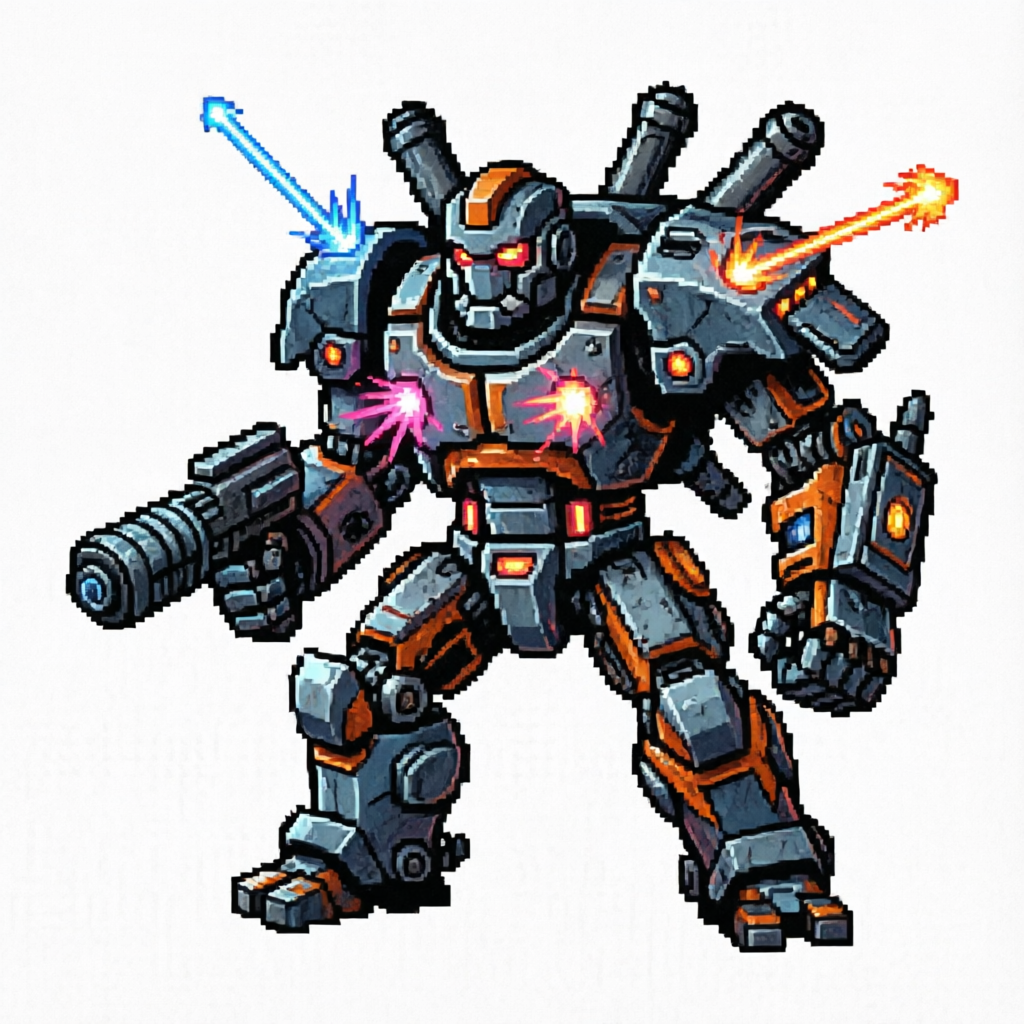
Build a Boss Boss Guide: How to Design Epic Encounters and Mechanics
Master encounter creation with our complete build a boss boss guide. Learn boss archetypes, phase mechanics, arena design, and balancing secrets.
Every memorable gaming experience peaks when players step through the fog gate or kick open the throne room doors to face a climactic encounter. Crafting that moment requires a deep understanding of pacing, action economy, and telegraphing, which is why our comprehensive build a boss boss guide breaks down the exact mechanics behind unforgettable showdowns. Whether you are developing an indie action RPG, designing a tabletop campaign, or tuning a custom game mode, using this build a boss boss guide will help you transform simple damage sponges into tactical, pulse-pounding masterclasses.
Great encounters do not happen by accident; they balance danger with readability, forcing players to adapt on the fly.
Core Pillars of Boss Architecture
Before writing a single line of combat code or statting out hit points, you must establish the boss's identity within the broader game ecosystem. A boss functions as an interactive exam. It tests whether the player has mastered defensive timing, spatial positioning, resource management, and offensive rotation.
According to classic industry perspectives on Game Developer's combat design analysis, an encounter must explicitly quiz players on the mechanics introduced throughout the preceding levels. If you introduce a grappling hook mechanic in World 3, your World 3 boss must demand grappling-hook maneuvers to avoid fatal stage hazards or reach weak points.
| Design Pillar | Primary Function | Common Failure State |
|---|---|---|
| Mechanical Examination | Tests core systems taught in previous stages | Relying on gimmicks not present anywhere else in the game |
| Readable Telegraphing | Communicates incoming damage windows clearly | Instant, unreactable attacks ("cheap shots") |
| Rhythmic Pacing | Alternates between pressure phases and punish windows | Constant offensive uptime leaving no room for counterattacks |
| Environmental Synergy | Integrates terrain, cover, and arena geometry | Flat, featureless rooms with zero tactical movement options |
When designers skip these pillars, players experience artificial difficulty. An engaging boss encounter should feel like a high-stakes conversation where both combatants react, reposition, and exploit tactical mistakes.
Boss Archetypes and Combat Roles
Every encounter benefits from choosing a foundation archetype. Aligning your boss concept with established archetypes establishes instant clarity for players while helping you scale abilities cleanly.
       [Boss Archetypes]
      /        |        \
[Juggernaut] [Duelist] [Puppeteer]
     |         |         |
High Armor   Parries    Minions &
Area Denial  Combos     Battlefield Control
1. The Juggernaut (Colossus/Tank)
These encounters emphasize heavy spatial awareness, positional dodging, and patience. Juggernauts move slowly, telegraph their massive sweeps well in advance, and punish mistimed rolls or reckless aggression with devastating burst damage.
2. The Duelist (Mirror Match)
Duelists operate on the player's scale, matching their speed, defensive options, and reach. They test parrying, counter-poking, and micro-spacing. These fights feel personal, athletic, and strictly skill-dependent.
3. The Puppeteer (Controller/Summoner)
Rather than challenging players directly with melee combos, Puppeteers control the battlefield using minions, traps, status effects, and projectile barrages. The primary challenge is target prioritization and crowd control.
| Archetype | Health Pool | Movement Speed | Threat Matrix | Best Player Counter |
|---|---|---|---|---|
| Juggernaut | Extremely High | Slow (0.5x Player) | High AoE, environmental destruction | Mobility, burst damage in punish windows |
| Duelist | Moderate | Fast (1.2x Player) | Rapid combo chains, counter-attacks | Precise parries, baiting whiff recoveries |
| Puppeteer | Low to Moderate | Teleportation / Tactical | Crowd density, persistent zone hazards | Bursting adds, mobility gap-closers |
| Skirmisher | Low | Very Fast (1.5x Player) | Hit-and-run, ranged poke | Crowd control, cornering, projectile shields |
Using our build a boss boss guide archetype matrix allows you to draft custom hybrids, like a Duelist who calls support minions during phase transitions, keeping the encounter fresh across multiple playthroughs.
Multi-Phase Structuring: The Three-Act Encounter
One of the most effective ways to prevent combat fatigue is multi-phase design. When an encounter remains completely static for six minutes, player boredom sets in. A well-constructed multi-phase structure resets engagement, raises narrative stakes, and introduces escalating mechanical complexity.
[Phase 1: Tutorial] ---> [Phase 2: Escalation] ---> [Phase 3: Climax/Enrage]
  - Basic strings           - Combo extensions        - Arena shrinks
  - Wide telegraphs         - Soft enrage timer       - Maximum attack speed
Phase 1: The Mechanical Briefing (100% – 70% HP)
In Phase 1, the boss showcases basic attack strings, standard wind-ups, and baseline movement. This phase teaches the player how to read telegraphs without inflicting lethal punishment for single mistakes.
Phase 2: The Escalation (70% – 30% HP)
The boss modifies its existing kit rather than introducing completely foreign moves. For instance, a horizontal sword slash that previously produced a safe recovery window now erupts with a trailing wave of fire. Phase 2 tests whether players can adapt their timing to punish windows that have become tighter.
Phase 3: The Climax / Desperation (30% – 0% HP)
The final stand introduces intense arena pressure, soft enrage timers, or environmental hazards. Attacks chain seamlessly, safe zones shrink, and the player must balance high-risk offensive execution with defensive resource conservation.
| Encounter Phase | Health Threshold | Mechanic Complexity | Safe Windows | Visual / Audio Cue |
|---|---|---|---|---|
| Phase 1 | 100% – 70% | Baseline kit; basic combo strings (2–3 hits) | Generous (1.5s–2.5s) | Standard stance, ambient music layer 1 |
| Phase 2 | 70% – 30% | Combo extensions (4–5 hits), elemental trails | Moderate (0.8s–1.2s) | Armor break, weapon infusion, tempo increase |
| Phase 3 | 30% – 0% | Overlapping hazards, full arena coverage | Tight (0.3s–0.6s) | Enrage aura, frantic orchestral score, skybox shifts |
When applying this build a boss boss guide framework, avoid invalidating player builds between phases. If a phase completely negates melee combat or grants permanent magic immunity, it feels cheap rather than challenging.
Designing Combat Arenas and Environmental Hazards
A boss battle is only as dynamic as the room it inhabits. An empty circular flat arena places the entire burden of engagement on the boss's animation kit. Integrating interactive geometry, breakable pillars, and dynamic hazards instantly deepens tactical depth.
+------------------------------------------+
|               [Boss Spawn]               |
|                                          |
|    [Destructible]      [Destructible]    |
|       Pillar               Pillar        |
|                                          |
|   ~~~~~~~~~~~~~~~~~~~~~~~~~~~~~~~~~~~~   |
|   ~~~~~ Dynamic Hazard / Lava Line ~~~   |
|   ~~~~~~~~~~~~~~~~~~~~~~~~~~~~~~~~~~~~   |
|                                          |
|              [Player Entry]              |
+------------------------------------------+
Environmental Hazard Matrix
| Arena Feature | Mechanical Benefit | Player Counterplay | Risk of Misuse |
|---|---|---|---|
| Destructible Cover | Blocks lethal line-of-sight attacks | Baiting charges into pillars | Leaving players with zero cover late fight |
| Shrinking Boundaries | Prevents passive kiting, forces engagement | Repositioning toward inner ring | Frustrating knockback ledge-deaths |
| Elevated Platforms | Grants verticality and ranged vantage | Climbing during boss recovery | Boss AI pathing breaking on elevation |
| Dynamic Ground Zones | Discourages camping in single corners | Rotating along safe floor sectors | Leaving no walkable ground available |
Player experience and community reports consistently highlight that arenas featuring interactive terrain create more memorable stories than flat battlegrounds. Breaking a column to stagger a charging behemoth rewards environmental awareness and elevates the overall encounter.
Balancing Math: Action Economy and Damage Curves
Math dictates how fair an encounter feels. A boss that can eliminate a player in a single hit without telegraphing generates frustration, while one that deals negligible chip damage fails to create tension.
When you reference this build a boss boss guide for stat distribution, consider the "Time to Kill" (TTK) for both sides:
Formel / Formula:
Ideal Encounter Length = 180 to 300 seconds (3 to 5 minutes)
| Balance Metric | Target Value (Solo Fight) | Target Value (Party/Co-op) | Adjustment Factor |
|---|---|---|---|
| Player TTK (Unmitigated) | 3 to 4 direct hits | 2 to 3 direct hits | Scale down if attack speed is fast |
| Boss TTK (Optimal DPS) | 180 seconds | 240 seconds | +40% HP per additional player |
| Telegraph Reaction Window | 400ms – 750ms | 400ms – 600ms | Never drop below human reaction limits (250ms) |
| Active Hitbox Uptime | 15% – 25% of combat | 25% – 35% of combat | Prevents endless continuous rolling |
Action economy determines how many offensive actions each side can execute per minute. If a party of four players gets four turns or actions for every one action the boss takes, the boss will be overwhelmed. To counter this without inflating stats, implement:
- Legendary/Reactionary Actions: Free reactions triggered at the end of a player's attack string.
- Passive Aura Damage or Deflection: Mechanisms that punish players for stacking on top of each other.
- Target Switching AI: Routines that swap aggro dynamically instead of locking onto the tankiest character indefinitely.
Step-by-Step Implementation Checklist
Follow this procedural checklist when developing an encounter from scratch using our build a boss boss guide:
- Establish the Core Fantasy: Define whether the fight is a desperate survival test, an athletic duel, or an environmental puzzle.
- Select the Primary Archetype: Pick a foundational combat role (Juggernaut, Duelist, Puppeteer, Skirmisher).
- Draft the Base Kit (Phase 1): Build 3 standard attacks, 1 gap-closer, and 1 clear defensive/repositioning move.
- Tune Hitbox Readability: Ensure visual effects (VFX) match physical hitboxes precisely.
- Implement Phase Transitions: Create 1–2 phase shifts that alter the arena or enhance existing attacks.
- Balance Action Economy: Add area-of-effect tools or reaction triggers to prevent the boss from being stun-locked.
- Conduct Playtesting Iterations: Watch testers tackle the boss blind; observe where they take damage and whether they understand why they were hit.
Taking the time to follow this build a boss boss guide workflow guarantees that your encounters feel fair, rewarding, and mechanically sound from the first prototype to the final release.
Frequently Asked Questions
What makes a boss fight feel unfair rather than difficult?
A fight feels unfair when players take damage they could not predict, react to, or understand. Unfairness stems from instantaneous attacks without visual telegraphs, visual effects that do not match underlying hitboxes, camera issues in tight spaces, or phase shifts that abruptly break established combat rules.
How do I balance boss health for solo players versus multiplayer groups?
Scale health and action frequency dynamically rather than simply increasing raw attack damage. A reliable rule of thumb is increasing boss health by roughly 40% to 50% for each additional player, while providing the boss with wide-sweeping cleaves or interrupt mechanics to manage multiple opponents simultaneously.
How many attacks should a standard boss have in its kit?
A well-designed encounter typically features between 5 to 8 distinct abilities distributed across phases. It is better to have 5 easily readable attacks with smart variations and combo branches than 15 disjointed moves that confuse players and dilute pattern recognition.
Can I use this build a boss boss guide for tabletop RPGs like D&D?
Yes. The principles outlined in this build a boss boss guide—specifically managing the action economy, building multi-phase encounters, and incorporating environmental hazards—apply directly to tabletop game mastering. In tabletop systems, use legendary actions, dynamic lair actions, and staged health thresholds to emulate video game phase transitions effectively.
Related Guides
Build a Boss Beginner Guide: Complete Step-by-Step Encounter Design
Master encounter design with this build a boss beginner guide. Learn attack telegraphs, arena mechanics, scripting, and stat balancing tips.
Build a Boss How to Make a Boss Fight Players Never Forget
Learn how to build a boss: how to make a boss encounter with unique phases, mechanics, and arena designs that challenge and engage players.
Build a Boss How to Spawn a Boss: Complete Summoning Guide & Mechanics
Master the sacrifice altar and festival summons with this guide on build a boss how to spawn a boss, sacrifice costs, and loot reward tiers.
Build a Boss: How to Make a Boss Fight That Keeps Players Hooked
Learn how to build a boss and craft memorable boss encounters. Explore pacing, telegraphing, arenas, and phase-based combat design.