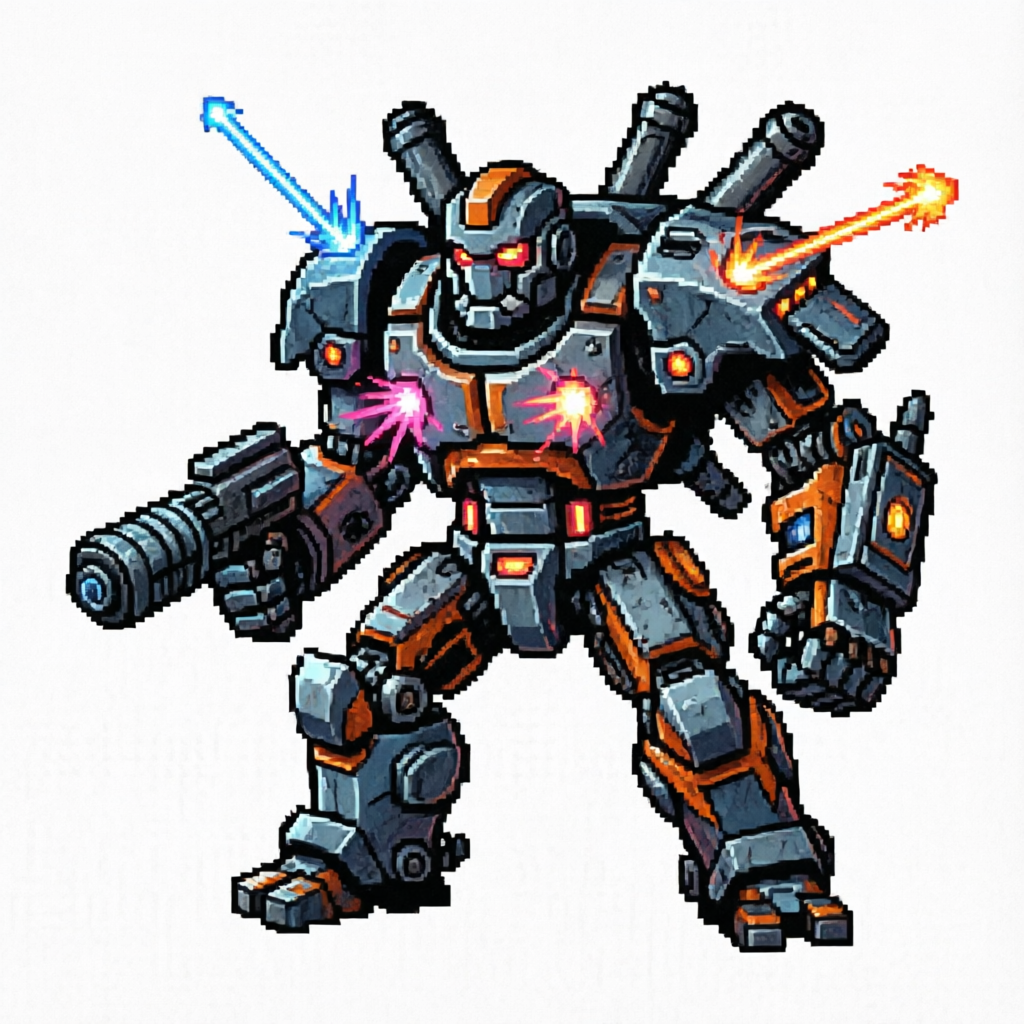
Complete Build a Boss Guide: Design Epic Encounters and Mechanics
Master encounter design with our complete build a boss guide. Learn pacing, attack phases, arena hazards, and balanced action economy.
Every memorable game defines itself through climactic encounters, making an intuitive build a boss guide essential for indie creators and tabletop game masters alike. When you sit down to craft a climactic encounter, following a proven build a boss guide ensures your battle feels challenging rather than frustrating. Striking the balance between high cinematic drama and mechanically sound gameplay transforms a run-of-the-mill damage sponge into a legendary showdown your players will talk about for years.
Whether you are scripting complex AI routines in Unity or building custom stat blocks for a weekend roleplaying session, encounter creation follows distinct structural rules. This guide walks you through every layer of encounter architecture—from establishing visual identity to choreographing phases, balancing action economies, and building dynamic arenas.
Core Archetypes: Defining Your Boss Concept
Before writing a single line of code or assigning hit points, establish the encounter's emotional core and mechanical archetype. A boss battle functions as an exam testing the skills, reflexes, or tactical strategies a player has acquired throughout the preceding levels. Selecting the right archetype guides attack design, movement patterns, and optimal engagement ranges.
| Archetype | Movement Profile | Primary Threat | Core Counterplay | Example Encounter |
|---|---|---|---|---|
| The Juggernaut | Slow, deliberate, unstoppable | Heavy melee, ground slams, crowd control | Kiting, hit-and-run, exploiting recovery lag | Dark Souls' Iron Golem |
| The Duelist | Rapid dashes, parries, teleportation | Fast combos, counter-attacks, evasion | Perfect parrying, poise breaks, timing windows | Hollow Knight's Mantis Lords |
| The Swarm Master | Stationary or hovering backline | Minion waves, buffs, area denial | Area-of-effect (AoE) burst, target prioritization | Diablo's Skeleton King |
| The Puzzle Behemoth | Fixed sequence, massive scale | Arena-wide environmental lethality | Weak point targeting, environmental interactions | Shadow of the Colossus colossi |
| The Glass Cannon | Extreme mobility, hit-and-fade | Spell combos, extreme ranged burst | Closing distance, interruptions, shield breaking | Elden Ring's Rennala (Phase 1/2) |
By picking a foundational archetype, you prevent feature creep. A single boss cannot easily serve as a hyper-mobile sniper, an armored immovable object, and a summoning mastermind all at once without overwhelming player focus.
Structuring the Battle: Pacing and Phases
A static fight becomes boring the moment players discover an optimal loop. Modern design prevents player complacency through multi-phase progression. Veteran level designers often point to classic beat frameworks documented on major game design platforms like Game Developer, where encounters rely on telegraphed cycles of tension, execution, and release.
When following an effective build a boss guide, phase progression should alter the player's core priorities rather than simply boosting numbers.
| Battle Phase | Health Threshold | Behavioral Shift | Audio / Visual Cues | Mechanical Objective |
|---|---|---|---|---|
| Phase 1: The Introduction | 100% – 70% HP | Telegraphed standard rotations, predictable recovery windows | Normal battle theme, standard lighting | Teach the player basic attack tells and safe zones |
| Phase 2: The Escalation | 70% – 35% HP | Faster recovery, mixed combo variations, arena restrictions | Music adds percussion; boss visual damage/aura | Force quicker decision-making and spatial adaptation |
| Phase 3: The Desperation | 35% – 0% HP | Enrage mechanics, hazards persist, high-lethality attacks | Climax orchestration, arena transformation | Test endurance, resource management, and burst damage |
Choreographing the Attack Beat
Every attack sequence requires three non-negotiable steps:
- The Tell (Anticipation): An unmistakable wind-up animation, audio cue, or ground decal telegraphing the incoming attack type and direction.
- The Strike (Execution): The active hitbox or damage event. This must be brief, crisp, and accurately reflect visual boundaries.
- The Recovery (Punish Window): The boss pauses, exhausts stamina, or recovers weapon momentum, giving players an opening to counter-attack.
Skipping the recovery beat creates "input reading" frustration, while omitting the tell leads to artificial difficulty.
Balancing the Action Economy and Minion Mechanics
One of the most frequent points of failure in combat encounters is the action economy. When multiple players or a party face a solitary enemy, the party drastically out-actions the villain. Left unmanaged, players can chain-stun, surround, and burn down the target before it cycles through its primary attacks.
Any thorough build a boss guide must address action distribution across the timeline.
| Action Economy Strategy | Implementation Method | Best Used For | Player Experience Impact |
|---|---|---|---|
| Legendary / Interrupt Actions | Boss acts out of turn order or after player actions | Turn-based RPGs, tabletop campaigns | Keeps the threat dynamic during long team turns |
| Stagger / Poise Thresholds | Heavy attacks fill an invisible stun meter rather than immediately interrupting | Action RPGs, hack-and-slash | Rewards aggressive play without trivializing the boss |
| Minion Deployment Waves | Spawns low-health adds during phase transitions | Raid bosses, top-down shooters | Diverts single-target burst into crowd control |
| Multi-Part Hitboxes | Limbs, tails, or weapons act as separate targetable units | Monster hunting genres, tactical RPGs | Encourages directional positioning and tactical disabling |
Player experience surveys across indie combat forums repeatedly demonstrate that minions with bloated health pools ruin boss flow. Keep support minions fragile: one or two hits should remove them, keeping the tempo focused squarely on the central encounter.
Designing the Arena: Environmental Storytelling and Hazards
The combat arena serves as a silent secondary opponent. A flat, featureless rectangle reduces the encounter to raw numbers. Incorporating cover, elevation, and evolving hazards deepens the mechanical sandbox.
+-------------------------------------------------------------+
|                     [Elevated Boss Roost]                   |
|                                                             |
|       [Cracked Pillar]                 [Cracked Pillar]     |
|          (Hard Cover)                     (Hard Cover)      |
|                                                             |
|                      [Rising Hazard Zone]                   |
|                  (Lava / Electric Floor Grate)              |
|                                                             |
|       [Ammunition Cache]               [Flanking Ledge]     |
|          (Interactive)                   (High Ground)      |
|                                                             |
|                       [Player Entry]                        |
+-------------------------------------------------------------+
Arena Hazards and Interactions
| Hazard / Element | Mechanical Purpose | Player Interaction | Designer Warning |
|---|---|---|---|
| Destructible Cover | Mitigates lethal ranged attacks | Lure boss strikes to break cover or dodge behind it | Ensure cover lasts long enough for safe repositioning |
| Shrinking Boundaries | Prevents endless running/kiting | Dodging inward toward danger as walls close | Never shrink the floor faster than baseline player sprint speed |
| Interactive Props | Provides opportunistic burst windows | Triggering hanging chandeliers, firing ballistas | Avoid making environmental gimmicks the only damage source |
| Vertical Platforms | Separates melee and ranged combatants | Grappling, jumping, or climbing to avoid floor hazards | Clear camera collision to avoid disorienting player views |
Step-by-Step Implementation Framework
Using this streamlined framework, you can prototype a balanced boss from scratch:
| Step | Action Item | Success Criteria |
|---|---|---|
| Step 1: Metric Baseline | Determine expected player damage per second (DPS) and survivability. | Boss survives 3–5 minutes against baseline competent play. |
| Step 2: Signature Moves | Script 1 standard combo, 1 ranged attack, and 1 area sweep. | All 3 moves possess clear visual tells and distinct evade timings. |
| Step 3: Arena Integration | Build an arena with at least two tactical terrain features. | Players naturally use terrain to counter at least one attack mechanic. |
| Step 4: The Phase Twist | Add a dramatic transition at 50% HP (new mechanic or arena shift). | The optimal strategy used in Phase 1 requires adaptation in Phase 2. |
| Step 5: Telegraph Tuning | Double telegraph frame windows; smooth out deceptive hitboxes. | Players report deaths feel fair and attributable to personal error. |
When testing your encounter, watch for player deaths. If a playtester dies without understanding what struck them, the telegraph failed. A successful build a boss guide approach prioritizes clarity over visual noise every single time.
Frequently Asked Questions
How long should a typical boss fight last?
For standard action games and RPGs, a well-paced encounter lasts between 3 to 6 minutes. Shorter fights fail to showcase all attack phases, while fights exceeding 8 to 10 minutes induce mental fatigue, turning mechanical mastery into an endurance test.
What is the biggest mistake developers make when building a boss?
The most common error is relying on inflated health pools and untelegraphed "one-shot" attacks to manufacture difficulty. True difficulty stems from complex pattern recognition, rapid decision-making, and spatial awareness, not pure damage sponginess.
How do I use this build a boss guide for tabletop RPGs?
Adapt these principles by giving your tabletop boss dynamic actions that trigger at set initiative counts (such as Count 20 and Count 10) rather than waiting for a single turn. Introduce terrain changes, destructible terrain, and dynamic objectives to keep the entire party engaged.
Should every boss encounter feature multiple phases?
While mini-bosses work well with a single refined phase, major milestone bosses benefit immensely from multi-phase designs. Transitioning phases resets combat pacing, heightens narrative drama, and prevents players from locking the boss into a single repetitive attack loop.
Related Guides
Build a Boss Beginner Guide: Complete Step-by-Step Encounter Design
Master encounter design with this build a boss beginner guide. Learn attack telegraphs, arena mechanics, scripting, and stat balancing tips.
Build a Boss Boss Guide: How to Design Epic Encounters and Mechanics
Master encounter creation with our complete build a boss boss guide. Learn boss archetypes, phase mechanics, arena design, and balancing secrets.
Build a Boss How to Make a Boss Fight Players Never Forget
Learn how to build a boss: how to make a boss encounter with unique phases, mechanics, and arena designs that challenge and engage players.
Build a Boss How to Spawn a Boss: Complete Summoning Guide & Mechanics
Master the sacrifice altar and festival summons with this guide on build a boss how to spawn a boss, sacrifice costs, and loot reward tiers.