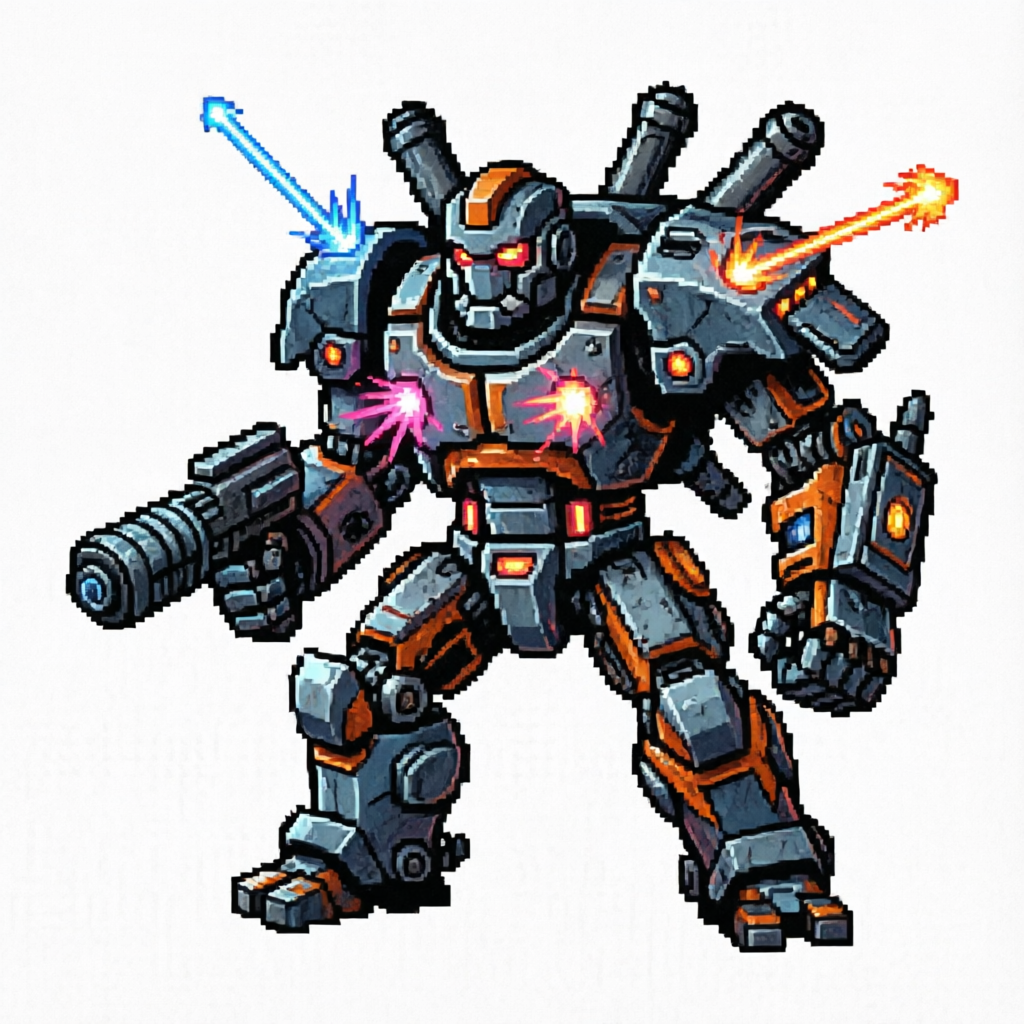
How to Build a Boss Final Boss: Epic Design Guide for Game Devs & DMs
Learn how to build a boss final boss that challenges players and delivers an unforgettable climax. Complete mechanics, narrative tips, and phase design.
Every memorable gaming journey deserves a climax that leaves players on the edge of their seats. When you set out to build a boss final boss, you are crafting the definitive test of skill, strategy, and emotional investment for your entire campaign or game. Learning how to properly build a boss final boss ensures your climax avoids the trap of being a boring, bloated damage sponge and instead delivers a cinematic showdown players talk about for years.
Whether you are designing an indie RPG, programming an action adventure, or crafting an endgame tabletop campaign, the anatomy of an endgame encounter requires deliberate pacing and mechanics. Let's break down the exact framework required to construct a truly legendary encounter.
Core Pillars: What Makes a Final Boss Truly Legendary?
A climactic encounter is far more than a standard enemy with multiplied hit points. A genuine capstone adversary tests everything the player has learned across their journey while testing their adaptability in real time.
       [ Narrative Stakes ]  <-- Emotional Investment
                |
       [ Mechanical Mastery ] <-- Skill & Resource Checks
                |
       [ Dynamic Escalation ] <-- Phase Changes & Arena Shifts
                |
       =========================
          UNFORGETTABLE FINALE
According to core game design principles outlined on resources like Gamasutra (Game Developer), great boss encounters balance three critical axes: readability, fairness, and tension.
| Design Pillar | Purpose | Common Mistake to Avoid |
|---|---|---|
| Narrative Friction | Connects mechanical victory to story resolution | Making the villain an unknown entity introduced five minutes prior |
| Action Economy Control | Prevents parties or players from stun-locking the foe | Giving the boss only one turn per combat round |
| Telegraphed Lethality | Allows tactical counterplay against wipe mechanics | Sudden one-hit kills with no visual or audio cues |
| Pacing Escalation | Naturally raises adrenaline across multiple health bars | Repeating the exact same attack pattern from start to finish |
When you build a boss final boss, player expectations are significantly higher than during mini-boss encounters. Players anticipate multi-layered mechanics that force them to use underutilized spells, items, or platforming maneuvers.
Crafting the Narrative: Consequences and Origins
The emotional resonance of a final fight often outweighs raw mechanical complexity. Community reports and veteran game masters frequently note that the most satisfying antagonists are those directly shaped by the player's past decisions.
Player experience shared across tabletop and RPG design circles shows that villains born from overlooked interactions—such as a betrayed former companion, a wronged NPC, or an ambitious rival whose plans were accidentally accelerated by the protagonist—evoke far stronger emotional reactions than generic, world-ending deities.
Antagonist Archetypes & Emotional Drivers
| Boss Archetype | Narrative Hook | Emotional Payoff | Ideal Encounter Dynamic |
|---|---|---|---|
| The Fallen Ally | Former party member pursuing a corrupted ideal | Tragic, personal confrontation | Mirror match; uses player-accessible abilities |
| The Inevitable Consequence | Minor NPC altered by player collateral damage | Bittersweet guilt and reckoning | Heavy environmental interaction and guilt-inducing dialogue |
| The Mirror Nemesis | Shares the protagonist's goals through extreme methods | Ideological debate through combat | Dual-phase clash challenging core playstyles |
| The Eldritch Sovereign | Ancient entity whose logic defies mortal reason | Desperate survival and cosmic awe | Arena-wide hazard management and endurance |
If the villain lacks personal connection, anchor the fight to secondary characters or locations the players hold dear. Make sure the stakes are clearly demonstrated before the first strike lands.
Multi-Phase Design: Blueprint for Escalation
A static boss fight quickly turns into a battle of attrition. To keep engagement high, modern design relies on multi-stage progression. When you plan to build a boss final boss, structuring the encounter into distinct phases alters tempo and prevents players from executing a single repetitive loop.
+-------------------------------------------------------------+
| Phase 1: The Thesis (Neutral, Pacing, Core Rhythm)          |
+-------------------------------------------------------------+
                              |
                              v
+-------------------------------------------------------------+
| Phase 2: The Antithesis (Arena Shift, Inverted Mechanics)   |
+-------------------------------------------------------------+
                              |
                              v
+-------------------------------------------------------------+
| Phase 3: The Desperation (Enrage, High Stakes, DPS Check)   |
+-------------------------------------------------------------+
Breakdown of a Three-Phase Encounter
| Phase | Boss State & Health Pool | Arena Condition | Player Strategic Objective |
|---|---|---|---|
| Phase 1: Measured Duel | 100% – 65% HP; Controlled, deliberate strikes | Static, standard layout with clear cover | Learn telegraphs and identify vulnerability windows |
| Phase 2: Arena Chaos | 65% – 25% HP; Unveils ultimate abilities, flight, or summons | Collapsing platforms, creeping hazards, split floor | Prioritize positioning, clear adds, adapt to split mechanics |
| Phase 3: Desperation / Enrage | 25% – 0% HP; Hyper-aggressive, reduced recovery time | Diminishing safe zones, continuous environmental chip damage | Burn high-value cooldowns, maintain resource efficiency |
Using distinct phases allows developers and DMs to tell a story through mechanics. In Phase 1, the boss holds complete control; by Phase 3, their strikes become ragged, wild, and unpredictable, showing genuine vulnerability and desperation.
Action Economy and Counterplay Mechanics
In tabletop systems like D&D or Pathfinder, as well as turn-based video games, a solo monster faces severe action-economy disadvantages. A squad of four adventurers can easily crowd-control a solitary boss unless counter-measures are built directly into their stat block.
When creators build a boss final boss, they often utilize legendary actions, passive triggers, and interrupt systems to balance the tactical scales.
| Mechanism | Tactical Purpose | Implementation Example |
|---|---|---|
| Reactionary Counters | Prevents alpha-strike burst damage | Teleporting or raising a shield after taking 20% max HP in a single turn |
| Off-Turn Disruptions | Keeps non-active players alert | Triggering environmental pulses or shockwaves between player turns |
| Cleanse Thresholds | Stops permanent crowd control locking | Shedding stun/freeze debuffs automatically upon phase transitions |
| Minion Symbiosis | Diverts direct focus away from the boss | Tethered adds that grant the boss invulnerability until broken |
Providing adequate telegraphing is mandatory. If an attack deals fatal damage, give it a distinct audio cue, glowing ground markers, or a complete preparatory turn so players can activate defensive abilities.
Step-by-Step Encounter Construction Framework
Follow this structured workflow whenever you sit down to develop your encounter stat blocks and mechanics:
| Step | Focus Area | Key Question to Answer | Output Deliverable |
|---|---|---|---|
| 1. The Goal | Core Win/Loss Condition | Can the boss be reasoned with, or must it be annihilated? | Clear objective statement |
| 2. The Arena | Geometry and Hazards | How does terrain force movement and flanking? | 2D/3D map with cover and hazard zones |
| 3. The Palette | 3–5 Signature Moves | What visual motif defines this character's combat style? | Telegraphed ability spreadsheet |
| 4. The Transitions | Phase Shifting Events | What narrative cutscene or trigger shifts the battle? | Staged health breakpoints and triggers |
| 5. The Tuning | Math & Damage Windows | How many rounds will this take optimal and casual players? | Time-to-kill (TTK) calculation matrix |
Taking the time to methodically build a boss final boss with this step-by-step framework eliminates sudden balance spikes and ensures every team member or player role feels essential to victory.
Frequently Asked Questions
What is the most common mistake when you build a boss final boss?
The most widespread mistake is relying on excessive health pools instead of dynamic mechanics. When an encounter simply inflates defense without changing attack patterns, the battle devolves into an uninspired grind rather than an exciting climax.
How many phases should an endgame encounter have?
For most video games and tabletop sessions, two to three phases represent the sweet spot. Two phases keep combat punchy, while three phases support a complete narrative arc (control, disruption, desperation). Adding four or more phases risks fatigue and player frustration unless checkpointing is provided.
How do I balance damage output so the boss feels threatening without feeling cheap?
Use wide, telegraphed area-of-effect abilities paired with avoidable burst mechanics. The boss should deal predictable baseline damage through standard attacks, saving massive damage spikes for attacks that give players at least 1.5 to 3 seconds (or a full turn in tactical RPGs) to dodge, guard, or interrupt.
Related Guides
Build a Boss Boss Roster Guide: Mechanics, History, and Legacy
Explore the complete Build a Boss boss guide, detailing monster mechanics, character archetypes, server history, and tactical multiplayer strategies.
Build a Boss Custom Bosses Guide: Design, Stats, and Mechanics
Master the art of creating Build a Boss custom bosses. Explore stat formulas, phase design, unique abilities, and balance tips for epic battles.
How to Build a Boss Giant Boss: Epic Mechanics and Encounter Design Guide
Learn how to build a boss giant boss encounter with multi-part anatomy, dynamic climbing phases, and cinematic combat rules for tabletop and game design.