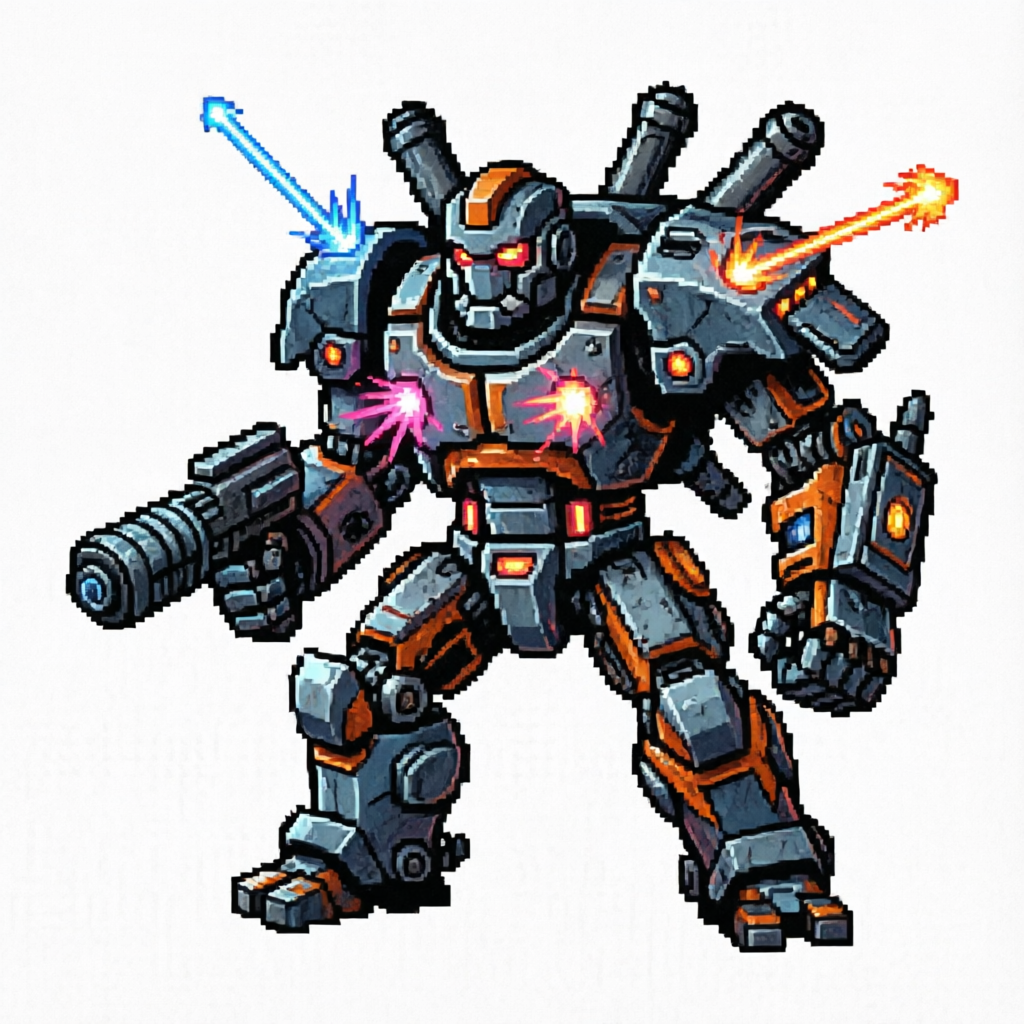
Build a Boss Custom Bosses Guide: Design, Stats, and Mechanics
Master the art of creating Build a Boss custom bosses. Explore stat formulas, phase design, unique abilities, and balance tips for epic battles.
Creating unforgettable raid encounters requires more than just scaling up hit points and boosting attack power. When you sit down to develop build a boss custom bosses, your primary objective is engineering a dynamic, multi-layered encounter that challenges teamwork and mechanical execution. Whether crafting an encounter inside sandbox shooters like Typical Colors 2, modding your private server, or tuning encounters in custom game engines, designing balanced build a boss custom bosses turns standard gameplay into a memorable trial of skill.
This comprehensive guide breaks down the architecture, statistics, balance curves, and creative templates required to forge world-class custom boss encounters.
Core Pillars of Custom Boss Architecture
Great boss design relies on clear telegraphs, fair punishment windows, and dynamic scaling. An encounter should never feel like an impossible meat shield or an unpunished slugfest.
       [ Core Design Pillars ]
                  │
   ┌──────────────┼──────────────┐
   ▼              ▼              ▼
Survivability   Mobility      Lethality
(EHP Pool)     (Engagement)  (Telegraphs)
   │              │              │
   └──────────────┬──────────────┘
                  ▼
         [ Balanced Fight ]
1. Effective Health Pool (EHP) Scaling
A boss fight should ideally last between 4 to 8 minutes for a full group. If the boss collapses in under two minutes, players miss the ability rotation; if the fight drags past ten minutes, mechanical fatigue sets in. Health pools must dynamically scale based on the number of active attackers.
2. Mobility and Arena Control
Static bosses are boring bosses. Custom encounters must command the arena through targeted gap-closers, area denial (AoE hazards), or vertical displacement. Bosses need mobility tools to avoid being cornered and pinned down by ranged spam.
3. Attack Telegraphing
Every high-damage ability must feature visual, auditory, or contextual warnings. Instant-death abilities without wind-up animations generate frustration rather than engagement.
| Design Attribute | Poor Execution | Best Practice |
|---|---|---|
| Damage Profile | Unavoidable instant-kill AoE attacks | Heavy hits with 1.5–2.5s cast times and ground indicators |
| Crowd Control | Permanent stun locks against players | Soft CC (slows, knockbacks, silencing zones) |
| Hitbox Design | Tiny, erratic collision boxes | Generous, clear hitboxes matching visual character meshes |
| Encounter Pacing | Static damage sponge from 100% to 0% | Distinct mechanical phases triggered at HP thresholds |
Step-by-Step Blueprint to Build a Boss Custom Bosses
Building a functional encounter follows a step-by-step pipeline. Rushing directly into ability programming without defining a core archetype leads to broken damage numbers and chaotic fights.
[1. Archetype Selection] ──> [2. Stat Calculations] ──> [3. Skill Trees] ──> [4. Phase Triggers] ──> [5. QA Testing]
Step 1: Select the Character Archetype
Decide how the boss commands space. Will it be a juggernaut that punishes grouped targets, an elusive skirmisher targeting backline supports, or a summoner controlling waves of minions?
Step 2: Establish the Baseline Formula
Set base health, movement speed multipliers, and primary damage output before attaching special spells. Movement speed should generally hover between 110% and 130% of base player movement speed to prevent continuous kiting.
Step 3: Script Primary and Secondary Attacks
Configure standard auto-attacks alongside a reliable bread-and-butter skill. Secondary abilities should feature cooldowns ranging between 8 and 20 seconds.
Step 4: Program Phase Threshold Triggers
Divide the encounter into distinct phases. The most successful build a boss custom bosses introduce unique arena modifiers or alternate weapon profiles at 75%, 50%, and 25% health thresholds.
Step 5: Iterative Playtesting and Tuning
Simulate combat against various team sizes. Track metrics like Average Time to Kill (TTK), player wipe rates, and ammo consumption to ensure the fight is properly tuned.
Character Archetypes and Stat Distributions
When you program build a boss custom bosses, starting from established archetypes streamlines balancing. The table below outlines standard base attributes calibrated for a standard 6-player fireteam.
| Boss Archetype | Base HP (x Players) | Movement Speed | Melee Hit (Dmg) | Primary Range Skill | Rage Mechanic Trigger |
|---|---|---|---|---|---|
| The Colossus | 3,500 HP | 90% | 85 (Cleave) | Ground Slam (Knockback) | 25% HP: Super Armor + Roar |
| The Phantom | 1,600 HP | 135% | 45 (Backstab x2) | Smoke Teleport / Blind | 50% HP: Triple Decoy Clones |
| The Pyromancer | 2,200 HP | 105% | 40 (DoT Burn) | Fireball Barrage | 33% HP: Arena Floor Magma |
| The Commander | 2,800 HP | 100% | 60 (Single) | Piercing Railgun | 50% HP: Reinforcement Squad |
Archetype Strengths and Weaknesses
- The Colossus: Excels at absorbing massive burst damage. Weak against sustained long-range fire and continuous kiting strategies.
- The Phantom: Demands rapid reflex tracking from players. Vulnerable to tracking abilities, explosive splash damage, and area-of-effect traps.
- The Pyromancer: Controls the flow of combat by denying cover. Highly susceptible to aggressive close-range shotguns and coordinated crowd-control interrupts.
- The Commander: Tests team communication by dividing focus between the boss and adds. Suffers when single-target assassin classes burst down elite adds immediately.
For deeper insights on systemic game balance and mechanical design frameworks, explore the game development archives on Gamasutra (Game Developer).
Designing Dynamic Combat Phases
Single-phase encounters frequently degenerate into monotonous firing lines. Introducing phases refreshes combat pacing, forces repositioning, and challenges player resource management.
100% HP ──────────────── 75% HP ──────────────── 50% HP ──────────────── 20% HP ────────────── 0% HP
 [Phase 1: Neutral]       [Phase 2: Add Waves]     [Phase 3: Arena Hazard]  [Enrage: Soft Enrage]
 Basic rotations           Summons enter field      Cover points collapse    Damage boosted +30%
Phase Transition Mechanics Table
| Phase | Health Bracket | Mechanical Shift | Intended Player Reaction | Boss Audio/Visual Cue |
|---|---|---|---|---|
| Phase 1 | 100% – 76% | Standard rotation; teaches basic swing & projectile timing | Learn attack patterns; maintain defensive positioning | Neutral stance, deliberate footstep audio |
| Phase 2 | 75% – 51% | Summons two elite guard adds; boss gains 50% damage resistance | Off-tanks peel minions; DPS splits focus to drop shield | Battle cry; summon banner planted |
| Phase 3 | 50% – 21% | Environmental hazards active; safe zones rotate clockwise | Raid repositions; mobility tools used to cross hazard zones | Ground shake effect; skybox visual shifts |
| Phase 4 (Enrage) | 20% – 0% | Speed +20%, cooldowns halved; soft enrage timer begins | Burn all ultimate cooldowns; execute rotation executed | Boss model glows red; bloodlust howl |
Implementing phase transitions prevents players from abusing static vantage points. When players know an environmental collapse occurs at 50% health, they must actively plan their escape routes rather than tunneling on pure damage output.
Custom Ability Matrices and Mechanics
A hallmark of high-tier build a boss custom bosses is a cohesive, thematic kit. Abilities should interact with one another to reward clever counter-play while punishing simple mistakes.
       [ Ability Synergy Pipeline ]
  (Primary Spell)     ──> Applies "Soaked" status
         │
         ▼
  (Secondary Spell)   ──> Targets "Soaked" player with Lightning Strike
         │
         ▼
  (Result)            ──> Detonates 300% AoE Burst (Counter: Cleanse/Disperse)
Curated Ability Loadout Sets
| Loadout Name | Primary Attack | Secondary Cooldown | Passive Aura | Ultimate / Rage Move |
|---|---|---|---|---|
| Void Warden | Void Bolt (Moderate damage projectile) | Gravity Well (Pulls players inward; 12s CD) | Abyssal Presence (-15% player healing received) | Event Horizon (Massive implosion; requires breaking line of sight) |
| Bio-Hazard | Slime Spitter (Applies stacking acid) | Toxic Geyser (Knocks target into air; 9s CD) | Caustic Miasma (Deals minor DoT inside a 5-meter radius) | Bio-Detonation (Explodes corpses and active slime puddles) |
| Clockwork Dread | Dual Steam Cleave (Melee sweep) | Overdrive Dash (High-speed charge; 15s CD) | Deflection Plating (Reflects front-facing projectiles) | Time Warp (Reverses player position to 4 seconds prior) |
Community Playtesting Insights
Based on player experience and community reports across custom community servers, bosses that rely on lingering ground debuffs receive higher engagement ratings than bosses with hitscan instant-damage weapons. When players dodge physical projectiles, the fight feels rewarding; when players receive instant hitscan damage from an omnipotent NPC, encounters feel unfair.
Balancing Formulas for Custom Boss Health and Damage
Calculating effective boss parameters should not rely on guesswork. Use these standardized formulas to calibrate health pools and damage thresholds across varying group sizes.
1. Boss Max Health Formula
Formel / Formula:
Max HP = Base Value + (Player Count * Class Health Median * Duration Scalar)
- Base Value: Flat threshold (e.g., 2,500 HP).
- Player Count: Number of active combatants (
N). - Class Health Median: Average player health (typically 125–200 HP).
- Duration Scalar: Adjusts length (use
3.0for standard 5-minute engagements).
2. Melee Damage Target Formula
Formel / Formula:
Melee Hit = Lowest Class Max HP * 0.65
Design Goal: Melee attacks should hit hard enough to threaten light classes without one-shotting them outright from full health.
3. Ability Damage Check Table
| Target Player Class | Typical HP | Boss Auto-Attack Dmg | Heavy Ability Dmg | Environmental Hazard Dmg/sec |
|---|---|---|---|---|
| Light / Scout / Assassin | 125 HP | 60 (48% HP) | 100 (80% HP) | 25 / sec |
| Medium / Support / Medic | 150 HP | 60 (40% HP) | 115 (76% HP) | 25 / sec |
| Standard / Assault | 200 HP | 75 (37% HP) | 135 (67% HP) | 30 / sec |
| Heavy / Tank | 300 HP | 85 (28% HP) | 165 (55% HP) | 35 / sec |
Using these statistical ratios ensures that creating build a boss custom bosses results in challenging yet mathematically fair gameplay for every class in the server.
Troubleshooting Common Boss Design Pitfalls
Even well-conceived encounters run into edge-case exploits. Fixing these errors early prevents players from trivializing your encounter mechanics.
Common Issues and Solutions
-
Problem: Boss Stuck in Geometry (Pathfinding Failure)
- Fix: Implement an automated unstuck routine. If the boss covers less than 32 units over a continuous 3-second window while aggressive, trigger an instant short-range blink or leap toward the nearest valid player navigation node.
-
Problem: Perma-Kiting Exploits
- Fix: Equip your boss with an anti-kiting mechanic. If the boss takes damage without dealing return damage over a 6-second span, grant a passive 25% speed buff (Relentless Pursuit) until landing a hit.
-
Problem: Stun-Locking by Coordinated Teams
- Fix: Add diminishing returns or a Tenacity stat. After suffering a hard crowd-control effect, make the boss immune to stuns and freezes for the subsequent 10 seconds.
-
Problem: Corner Camping by Players
- Fix: Add bouncing projectiles or lingering ground fire that punishes players who refuse to leave dead ends and narrow corridors.
Frequently Asked Questions
What makes build a boss custom bosses feel fair to casual players?
Fairness comes down to clear visual signaling and consistent counterplay. Attacks that deal heavy damage should always feature a recognizable wind-up animation, audio cue, or ground marker. If players understand what caused their defeat, they view the encounter as a fun challenge rather than an unfair loss.
How much health should a custom boss have for a 10-player lobby?
For a 10-player team, a standard encounter typically requires between 25,000 and 40,000 total Effective Health Pool (EHP), depending on average weapon DPS. If your boss features defensive phases or damage-immune transitions, lower the base health pool by 20% to prevent the battle from feeling tedious.
Can I build a boss custom bosses encounter with solo-player scaling?
Yes. Effective solo scaling requires lowering primary attack damage so players can survive mistakes, alongside removing mechanics that mandate group coordination (such as dual-button interactions or split-aggro phases). Replace summon waves with interactive environmental hazards that solo players can disarm.
How do I prevent snipers from trivializing my custom boss?
Incorporate defensive mechanics like projectile-reflecting shields, periodic smoke screens that disrupt long-range line of sight, or aggressive teleport abilities that close the distance when long-range damage exceeds specific thresholds. Arena design with plenty of natural cover also prevents players from exploiting infinite sightlines.
Related Guides
Build a Boss Boss Roster Guide: Mechanics, History, and Legacy
Explore the complete Build a Boss boss guide, detailing monster mechanics, character archetypes, server history, and tactical multiplayer strategies.
How to Build a Boss Final Boss: Epic Design Guide for Game Devs & DMs
Learn how to build a boss final boss that challenges players and delivers an unforgettable climax. Complete mechanics, narrative tips, and phase design.
How to Build a Boss Giant Boss: Epic Mechanics and Encounter Design Guide
Learn how to build a boss giant boss encounter with multi-part anatomy, dynamic climbing phases, and cinematic combat rules for tabletop and game design.