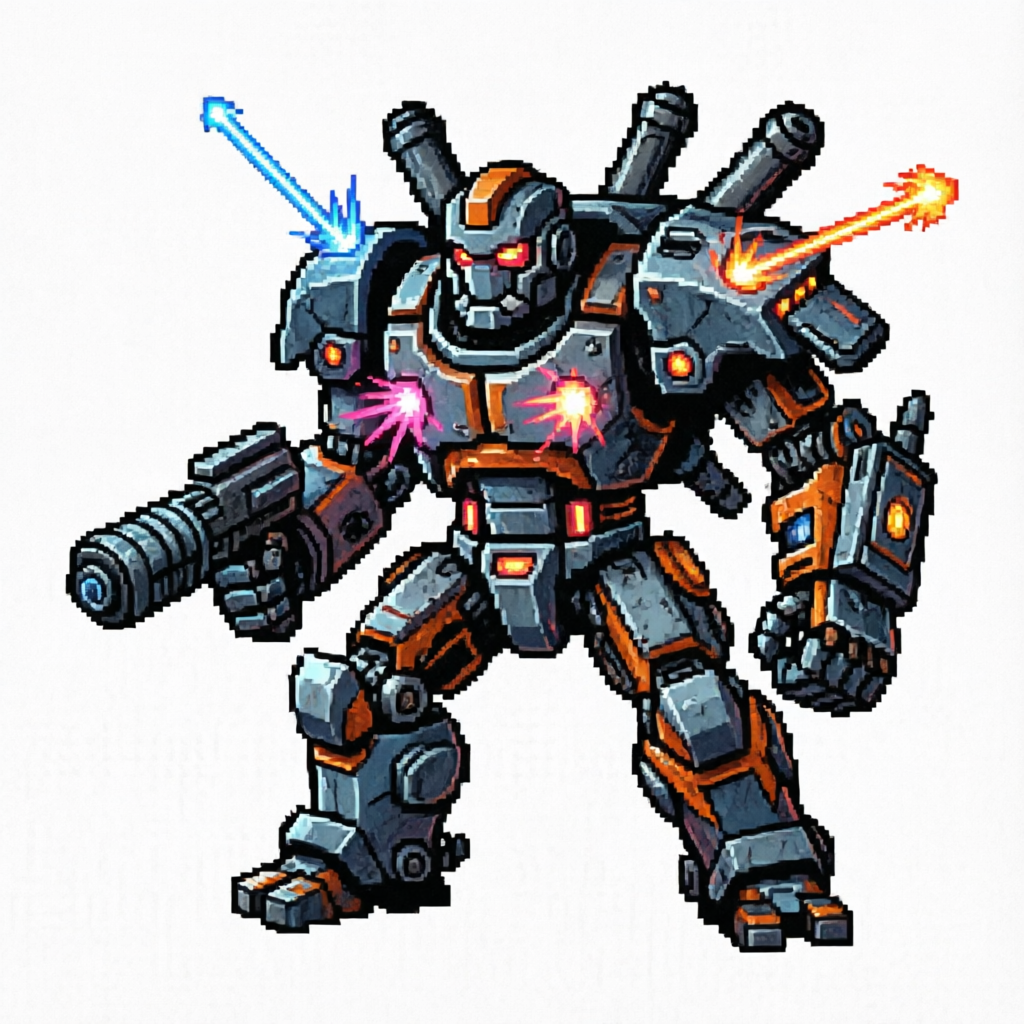
How to Build a Boss: New Bosses Design Guide, Balancing, and Mechanics
Master encounter design with our guide on how to build a boss. Create thrilling new bosses with custom stats, phased arenas, and balanced mechanics.
Every game master and encounter designer reaches a point where standard monster manuals fail to deliver the dramatic tension their campaign deserves. When you set out to build a boss, new bosses must do far more than soak up hits as glorified damage sponges—they need to reshape the battlefield and test player tactics. If you want to successfully build a boss, new bosses should push your group’s resource management to the brink while rewarding clever counterplay.
Designing memorable climaxes requires finding the sweet spot between mechanical depth, narrative weight, and real-time adaptability. Whether you are running a high-fantasy tabletop campaign, crafting a custom module, or staging a video game encounter, this comprehensive design guide breaks down the essential framework for crafting show-stopping encounters.
The Core Blueprint: Conceptualizing Threat Before Numbers
Before opening a spreadsheet to calculate Armor Class, hit points, or attack bonuses, you must define the encounter's emotional and mechanical thesis. Great boss battles start with an aesthetic vision that informs their interactive quirks. Are your players facing a rogue celestial tearing reality apart, or an agile, parrying duelist dancing along crumbling pillars?
A common pitfall in encounter crafting is treating numbers as the primary source of danger. System-agnostic encounter building reveals that arbitrary defensive bonuses (such as flat +2 or +3 armor bonuses) yield wildly inconsistent results depending on your rule set. In games with tightly bounded accuracy, small static bonuses create insurmountable math walls. In open-ended math systems, those same bonuses are negligible against optimized builds.
Instead of raw inflation, build your concept around three foundational pillars:
- Strategic Vector: What vector of combat does the boss target? (e.g., positioning, status cleanse, endurance, burst mitigation).
- Arena Dynamic: How does the battleground actively interfere with standard tactical routines?
- The Pacing Clock: What stops the party from turtling or using repetitive, risk-free rotations?
| Design Element | Flawed Implementation | High-Impact Implementation |
|---|---|---|
| Defenses | Massive static health pool and sky-high armor stats | Damage mitigation shields tied to destructible arena totems |
| Damage Output | One-shot burst attacks targeting individual squishy targets | Telegraphed zone attacks that force movement and cover use |
| Crowd Control | Total paralysis locking a player out of playing their turn | Degrading slows, forced repositioning, or resource leeches |
| Arena Interaction | A flat, symmetrical 40x40 room | Shifting hazards, high ground vantage points, and crumbling cover |
When you sit down to build a boss, new bosses thrive when their abilities directly reflect their lore. For deep dives into industry-standard combat design principles, check out Gamasutra's game design analyses on Game Developer, which outline how readable boss animations and visual telegraphs keep encounters fair yet punishing.
Assessing Player Capability and Resource Depletion
A boss fight does not happen in a vacuum; it acts as the final punctuation mark of an entire adventuring day or dungeon crawl. Balancing an encounter against a baseline game system is a recipe for disaster. Instead, you must calibrate your creation directly against the specific party sitting at your table.
To set realistic difficulty, assess your party's offensive ceiling, secondary damage output, and defensive safety nets.
Party Danger Index = (Burst Potential + Crowd Control Options) / Available Healing Pools
If the party navigated three grueling skirmishes before reaching the inner sanctum, their top-tier spell slots or ultimate abilities are likely spent. If you throw a boss requiring high burst output at an exhausted party, you risk causing an unintentional total party wipe. Conversely, a fully rested group facing a solitary foe will dismantle hundreds of hit points in a couple of combat rounds.
| Party State | Typical Resource Reserves | Recommended Boss Encounter Archetype |
|---|---|---|
| Fresh (Full Rest) | 100% Spell Slots, Cooldowns Ready, Full Consumables | Multi-phase titan with add spawns and action-economy multipliers |
| Moderate Attrition | ~50% Hit Dice / Potions, Secondary Abilities Available | Puzzle boss prioritizing tactical positioning over raw damage checks |
| Severely Depleted | Low Hit Points, Zero Long-Rest Nukes, Running on Basics | Environmental survival encounter focused on objective completion |
Community reports from tabletop game masters emphasize that tracking party-wide multi-target capabilities prevents add-heavy fights from falling flat. If your party lacks broad area-of-effect spells, summoning swarms of minions turns a dramatic duel into an agonizing slog.
Action Economy and Phase Transitions
The biggest enemy of any climactic boss is the action economy. In turn-based and tactical games, a group of four to six adventurers will always overpower a lone combatant simply by acting more times per round. To solve this dilemma when you build a boss, new bosses should feature segmented health pools, reactive abilities, and phased transitions.
Breaking the Turn-Order Advantage
Rather than letting players unload their entire repertoire at the top of the round, introduce off-turn triggers:
- Interrupts: The boss activates a defensive pivot or counterattack upon suffering a critical hit.
- Lair Actions: Fixed count-up events that trigger on specific initiative counts, shifting the arena layout.
- Threshold Triggers: Once a health pool drops past a benchmark (e.g., 75%, 50%, 25%), the boss immediately shakes off crowd-control effects and moves.
| Phase Stage | Health Threshold | Boss Behavior Shift | Arena Mutation |
|---|---|---|---|
| Phase 1: Probing | 100% – 70% | Single-target strikes, testing frontline resolve | Arena stable; regular cover available |
| Phase 2: Escalation | 69% – 30% | Unlocks sweeping area attacks; summons specialized adds | Outer ring of the arena collapses; floor hazards activate |
| Phase 3: Enrage | 29% – 0% | Sacrifices defense for raw speed; double attack cadence | Hazard ticks every round; soft enrage timer begins |
When designers build a boss, new bosses that utilize phased health gates prevent the party from trivializing a climactic story beat with lucky early-round critical hits. Phasing also resets the tactical puzzle, forcing players to reassess their positioning halfway through the fight.
Balancing Math: Tailoring Damage, Durability, and Accuracy
Once the mechanical identity is locked down, you can establish numerical baselines. The table below outlines a standard balancing matrix for evaluating defensive metrics against party damage output across typical campaign tiers.
| Encounter Bracket | Recommended Effective HP Pool | Average Armor / Defense Rating | Recommended Damage Per Round (Single Target) | Recommended Damage Per Round (Multi-Target) |
|---|---|---|---|---|
| Tier 1 (Early Game) | 120 – 180 | Low-to-Moderate (Hit rate ~65%) | 12 – 18 | 6 – 10 (Dexterity check/Reflex) |
| Tier 2 (Mid Game) | 280 – 420 | Moderate (Hit rate ~60%) | 35 – 50 | 20 – 30 (Telegraphed blast) |
| Tier 3 (Late Game) | 550 – 850 | High (Hit rate ~50–55%) | 75 – 100 | 45 – 60 (Persistent auras) |
| Tier 4 (End Game) | 1,100 – 1,800+ | Very High (Hit rate ~45–50%) | 140 – 200+ | 80 – 110 (Full-field cataclysms) |
When you tweak these numbers to build a boss, new bosses must feel threatening without crossing into mathematical unfairness. Player experience shows that encounters feel most rewarding when the boss lands frequent, moderately damaging hits rather than rare, binary attacks that either miss completely or instantly down a character.
Mid-Combat Adaptability: Reading the Table
Even meticulously calculated encounters can veer off course due to aberrant dice rolls or unexpected player synergies. A seasoned encounter designer watches the table dynamic and adjusts values behind the curtain to preserve dramatic tension.
If your frontline damage dealer misses four consecutive turns due to abysmal rolling, holding rigid to maximum hit points drains the energy from the room. Conversely, if your wizard exploits an unforeseen elemental vulnerability that bypasses your primary puzzle, let them enjoy their stroke of brilliance—while introducing an adaptive countermeasure in the next phase.
| Mid-Fight Symptom | Root Cause | Subtle Designer Adjustment |
|---|---|---|
| The Slog | Boss health pool is too deep; combat has devolved into basic auto-attacks | Drop total health pool immediately; activate phase 3 enrage early to force a quick conclusion |
| The Stomp | Party is chewing through defenses before the boss takes two turns | Trigger a reactive shield; summon an elite minion to intercept ranged fire |
| The Lockdown | Boss failed a debilitating crowd-control save and cannot take actions | Spend an action-economy resource or enter the next phase early to cleanse status effects |
| The Spurious Wipe | High initial burst unexpectedly downed the party's primary support | Direct the boss's aggression toward a tanky target or environmental objective |
Designing encounters is a collaborative storytelling performance. You have the ultimate authority to decide if an enemy alters their target priority, changes tactics, or foregoes a devastating spell in favor of an athletic grapple to keep the drama alive.
Thematic Archetypes for Custom Boss Encounters
To jump-start your creation process, here is a breakdown of four distinct archetypes you can adapt when you build a boss, new bosses for upcoming sessions.
| Boss Archetype | Core Combat Identity | Primary Strength | Inherent Vulnerability |
|---|---|---|---|
| The Juggernaut | Slow, heavily armored, hits like a siege engine | High resistance to physical damage, crowd-control immunity | Low mobility; vulnerable to kiters and difficult terrain |
| The Puppetmaster | Low personal durability; manipulates summons and traps | Controls the battlefield; forces party to split focus | Weak when cornered; summons expire if concentration breaks |
| The Skirmisher | High mobility, stealth, precision burst damage | Hard to pin down; targets squishy spellcasters directly | Fragile under focused fire; shut down by movement-restricting spells |
| The Catalyst | Mutates over time; environmental spellcaster | Escalating threat clock; alters arena terrain each turn | Predictable telegraphs; leaves energy cores exposed during casts |
Selecting a clear archetype keeps the encounter focused. Rather than trying to make your creation good at everything, give it an obvious operational style that challenges your players to rethink their default strategies.
Frequently Asked Questions
What is the most common mistake when trying to build a boss?
The most frequent error is simply inflating health and defense stats without adding dynamic mechanics or action-economy tools. When you build a boss, new bosses must feature multi-actions, environmental triggers, or distinct phases. Simply making an enemy take longer to defeat creates tedious attrition rather than thrilling combat.
How do I prevent my boss from being defeated in the very first round?
Use multi-stage health pools, defensive threshold triggers, and dynamic entry strategies. Give the boss immediate off-turn reactions, breakable energy barriers, or starting cover that prevents the party from expending all their high-damage cooldowns before the boss takes a single action.
Should I tell players the exact mechanics of a new boss fight?
Telegraph the mechanics through narrative descriptions and visual cues rather than revealing raw numbers. Describe energy swirling around a limb before a massive strike, or depict glowing runes on protective totems. This communicates the underlying rules naturally, letting players solve the tactical puzzle without breaking immersion.
Related Guides
Build a Boss New Update Breakdown: Complete Patch Notes & Boss Crafting Guide
Explore the latest Build a Boss new update with our comprehensive patch breakdown, boss crafting mechanics, reward balance stats, and combat strategies.
Build a Boss Update: How Custom Boss Battles Can Transform Minecraft Survival
Explore the ultimate build a boss update concept for Minecraft, featuring custom boss summon designs, progression reworks, arena tips, and boss concepts.