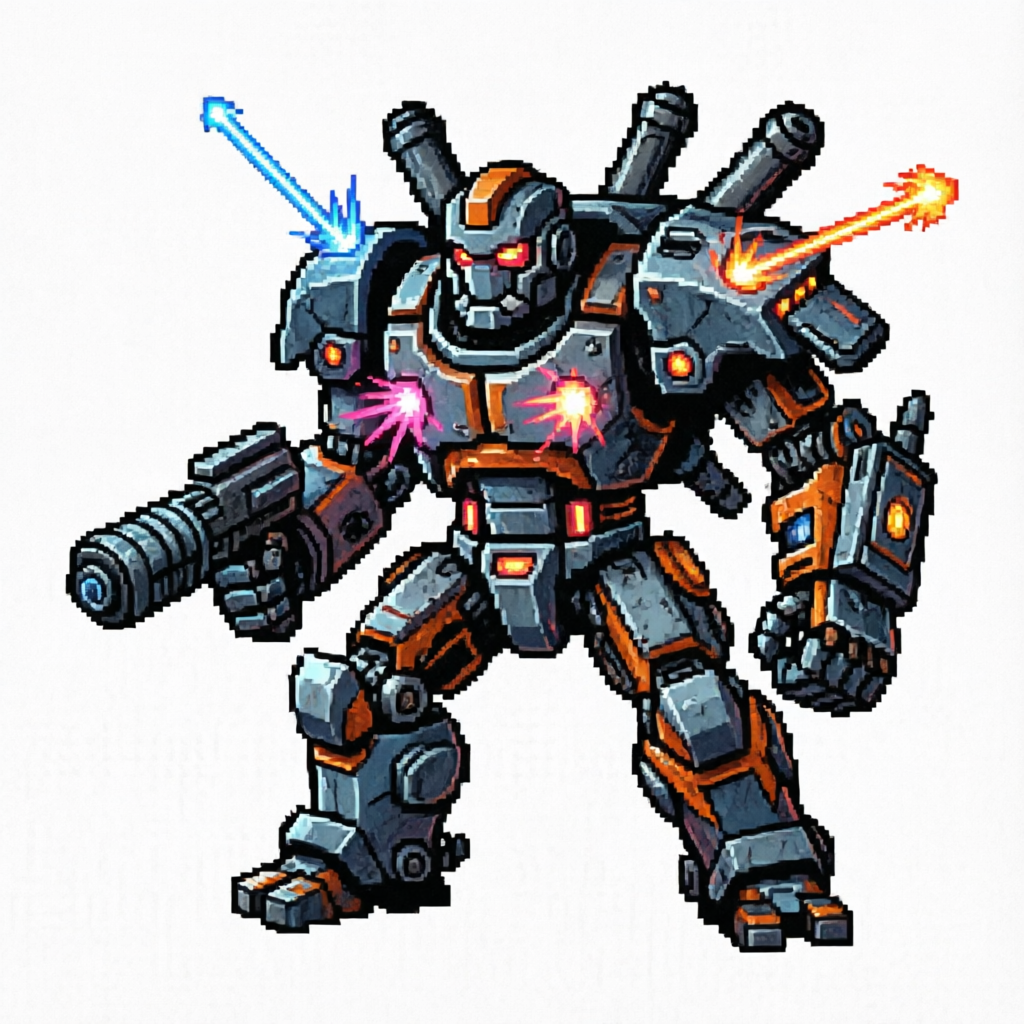
How to Build a Boss Boss Battle Challenge: Design Epic Clashes
Learn how to build a boss boss battle challenge with phase design, arena hazards, and balanced combat mechanics for games and tabletop campaigns.
Whether you are crafting a tabletop campaign or scripting an indie video game, nothing tests player mastery quite like a monumental showdown. When you set out to build a boss boss battle challenge, your goal is not merely to create a damage sponge with inflated numbers, but to deliver a climactic puzzle that demands tactical adaptation. If you want to successfully build a boss boss battle challenge that leaves your players breathless rather than frustrated, you need a structured framework that merges narrative stakes with mechanical variety.
Designing an unforgettable climax requires balancing action economy, environmental hazards, dynamic telegraphs, and satisfying pacing. This comprehensive guide walks you through every step of constructing an unforgettable encounter from the ground up.
Core Archetypes: Finding the Blueprint for Your Encounter
Every great encounter begins with a distinct concept that dictates rhythm and positioning. Throwing a generic bruiser into a flat room almost always leads to a stale slugfest where players simply rotate their highest-damage skills. Instead, choosing a concrete archetype anchors your design choices and informs everything from arena layout to secondary objectives.
Game developers and tabletop creators frequently draw inspiration from classic encounter designs outlined in professional post-mortems and resources like Gamasutra's Game Developer guides, which emphasize clear player-readable intentions over raw difficulty spikes.
| Boss Archetype | Primary Mechanical Focus | Arena Requirements | Ideal Player Counter-Strategy |
|---|---|---|---|
| The Juggernaut | Heavy, telegraphed single-target bursts; high damage reduction | Wide, destructible cover; clear pathing routes | Kiting, defensive repositioning, exploiting recovery windows |
| The Hivemind / Summoner | Adds manipulation, screen-filling area denial, swarm pressure | Multi-tiered terrain, choke points, line-of-sight breakers | Target prioritization, burst AOE damage, interrupting spells |
| The Phantom Duelist | Rapid mobility, parry windows, stealth, precision counters | Tight corners, dynamic lighting, interactive traps | Crowd control, predictive skill shots, baiting engagement |
| The Environmental Titan | Targetable limbs, arena-wide hazards, puzzle-driven vulnerability | Vertical platforms, moving components, hazard switches | Positional coordination, objective execution, timed DPS phases |
Before picking an archetype, evaluate what skills your players have relied on so far. An encounter should celebrate their progression while disrupting their comfort zone. If your group depends entirely on stationary ranged attacks, an agile duelist or a mobile hazard creator forces them to rethink their baseline assumptions.
Phase Architecture: Structuring Dynamic Evolution
A static fight loses its dramatic tension the moment players decipher the attack pattern. To keep engagements intense, you must introduce phased escalation. A multi-phase structure resets expectations, raises stakes, and forces players to alter their loadouts or tactics in real time.
When planning to build a boss boss battle challenge, standard design dictates between two and four distinct phases depending on the scope of the encounter:
Phase 1: Foundation (100% - 75% HP) -> Teach basic patterns and attack tells
Phase 2: Escalation (75% - 40% HP)   -> Alter arena, add secondary mechanics
Phase 3: Desperation (40% - 0% HP)   -> Combine overlapping threats, enrage timers
| Phase Level | Health Threshold | Tactical Shift | Player Experience Notes |
|---|---|---|---|
| Phase 1: Tutorial | 100% to 75% | Standard attack loops, single telegraphs, baseline mobility | Community reports indicate players appreciate seeing major mechanics in isolation first. |
| Phase 2: Complication | 75% to 40% | Environmental changes, add summons, reduced safe zones | Forces players to divide attention between survival and damage output. |
| Phase 3: The Enrage | 40% to 15% | Faster telegraphs, combined skill sets, arena decay | Creates urgency; mistakes become punishing, requiring efficient resource spending. |
| Phase 4: Climax (Optional) | 15% to 0% | Soft enrage DPS check, desperate cinematic maneuvers | Keeps tension high without artificially padding overall encounter duration. |
Community reports from tabletop game masters and action-RPG modders suggest that transitions between phases should always come with distinct audio-visual or descriptive cues. Transformative shifts—such as a beast breaking its armor to gain attack speed, or a sorcerer shattering the floor into floating platforms—signal clearly that old playbooks no longer apply.
Action Economy and Attack Telegraphs
One of the most common pitfalls when you build a boss boss battle challenge is mismanaging the action economy. In tabletop environments like D&D or Pathfinder, a lone boss can easily be locked down by crowd control spells if they only act once per round. In real-time digital titles, a boss with instantaneous, untelegraphed attacks feels cheap rather than challenging.
To solve this, implement granular telegraph systems alongside distributed actions:
- Wind-Up Visuals: A minimum window (0.5 to 1.5 seconds in action games, or full round telegraphs in tabletop) alerting players to a lethal attack.
- Off-Turn Actions: Legendary actions, reactive parries, or environmental pulse waves that disrupt player momentum outside the boss's primary turn.
- Decoupled Vulnerability Windows: Rewarding successful dodges or counter-attacks with brief stun phases where players can safely commit their highest-value abilities.
| Telegraph Type | Indicator Example | Player Window to React | Typical Punishment for Failure |
|---|---|---|---|
| Ground Decal / AOE Marker | Red expanding circle, cracking earth | 1.2 to 2.5 seconds | Knockdown, lingering elemental burn |
| Stance Cue / Silhouette Change | Weapon drawn back, glowing eyes | 0.8 to 1.4 seconds | Heavy physical hit, shield break |
| Channeled Cast | Runes spinning overhead, audible hum | 3.0 to 6.0 seconds | Arena-wide damage pulse, stat debuff |
| Tracking Projectile | Crosshair tracking character, laser beam | 1.5 to 2.0 seconds | High single-target pierce, armor degradation |
Clear signaling gives players agency. When failure stems from ignoring a recognizable telegraph rather than random RNG spikes, players remain motivated to retry the encounter.
Designing the Arena: Beyond Flat Square Rooms
The battleground is as much an opponent as the entity standing in the center. An open, featureless arena reduces gameplay to basic math calculations: outgoing damage versus incoming damage. A carefully crafted battlefield transforms the encounter into an interactive tactical challenge.
If your objective is to build a boss boss battle challenge that players talk about long after victory, incorporate interactive terrain elements:
- Dynamic Elevation: Ramps, pillars, and ledges that reward players who maneuver for high-ground advantages while avoiding ground-based shockwaves.
- Destructible Cover: Pillars that shield players from lethal beam attacks but break after two hits, preventing endless turtling.
- Interactive Hazards: Ballistas, falling chandeliers, or steam vents that can be triggered to damage or stun the boss when timed correctly.
- Zone Shrinkage: Lava rising, collapsing ceiling tiles, or encroaching poison clouds that systematically limit movement space during later phases.
| Arena Element | Defensive Value | Offensive Opportunity | Risk Factor |
|---|---|---|---|
| Stone Columns | Blocks line-of-sight attacks | Can be knocked down onto boss for stuns | Collapse deals debris damage if players stand too close |
| Elevated Catwalks | Avoids ground-level hazard pools | Provides clear line-of-sight for ranged burst | Boss can sweep catwalks, causing lethal fall damage |
| Arcane Conduits | Provides temporary resistance shields | Overloading conduits silences boss magic | Walking through conduits applies stacking energy sickness |
| Water / Ice Patches | Extinguishes lingering fire debuffs | Amplifies electrical and freeze attacks | Drastically reduces movement traction and sprint recovery |
Player experience across multiple game genres confirms that interactive arenas level the playing field for different character builds. Tankier characters can lure the boss near traps, while mobile scouts manipulate levers and control zone mechanics.
Step-by-Step Blueprint: Balancing Health, Damage, and Duration
A well-paced encounter should feel like a marathon run at a sprint, yet it must avoid dragging on indefinitely. In most action games, a boss fight should resolve within 4 to 8 minutes; in turn-based tabletop sessions, 4 to 6 rounds is generally the sweet spot before fatigue sets in.
Follow this systematic roadmap whenever you build a boss boss battle challenge:
Step 1: Determine Baseline Party Damage Output
Step 2: Calculate Effective Health Pool (Base HP + Armor/Shields)
Step 3: Establish Lethality Budget per Round/Phase
Step 4: Distribute Add Spawns and Objective Timers
Step 5: Run Playtests and Adjust Telegraph Durations
| Step | Design Action | Target Metric / Benchmark | Adjustment Lever |
|---|---|---|---|
| 1. Damage Baseline | Calculate the average sustained party output per minute/round | Baseline = (Player DPS × Active Damage Uptime %) | Account for dodging windows and mechanics |
| 2. Health Budget | Set boss health equal to desired fight length in minutes | Target: 4–6 combat rounds or 5–7 minutes digital time | Add invulnerability shields instead of raw HP |
| 3. Burst Cap | Prevent any single boss attack from killing a full-health target | Maximum single hit = 65% to 80% of max player health | Replace one-shots with stacking vulnerability debuffs |
| 4. Resource Drain | Gauge health potions, spell slots, or stamina depletion | Players should end the fight with ~15% resources remaining | Tweak frequency of minor chip-damage mechanics |
| 5. Feedback Pass | Playtest internal readability of indicators and phase shifts | 90% of test player deaths should feel self-inflicted | Lengthen attack animations by 150–300ms |
When you balance mathematical numbers against human reaction time, you preserve tension without creating artificial roadblocks. The thrill of a battle comes from narrowly escaping danger, not restarting due to unpredictable math.
Testing and Iteration: Avoiding Common Balance Mistakes
Designing an encounter on paper is only half the battle. Real-world testing invariably reveals balance anomalies that can undermine an otherwise stellar fight. Watching unguided playtesters or running mock combat simulations will immediately expose mechanics that sound fun in theory but cause frustration in execution.
When tuning your encounter, watch out for these recurring pitfalls:
- Invulnerability Padding: Avoid making a boss completely immune to damage for extended periods without giving players an engaging secondary task, such as disarming a power core or clearing dangerous adds.
- Visual Clutter: When too many particle effects, hazard zones, and minion models overlap, players lose track of the boss's primary silhouette and telegraphs.
- Unbreakable Stun-Locks: Player agency must be preserved. If a boss lands a crowd control effect, it should be followed by a clear, escapable recovery window rather than an inescapable kill combo.
By systematically refining your mechanics against player feedback, you guarantee that every victory feels earned through mastery, strategy, and teamwork.
Frequently Asked Questions
What makes an encounter feel fair rather than cheap?
Fair encounters emphasize readability and consistent rules. When you build a boss boss battle challenge, every lethal maneuver should feature a recognizable tell, clear wind-up frames, and predictable hitboxes. If a player dies, they should immediately understand what mistake they made and how to avoid it on their next attempt.
How do I handle party balance if player builds vary widely?
Avoid designing an encounter that requires one specific damage type or damage range. Blend multiple encounter objectives: provide elevated platforms for ranged characters, destructible armor plates for melee fighters, and crowd control targets for utility casters so that every playstyle contributes meaningfully to victory.
How much HP should a multi-phase boss have?
Rather than giving a boss a massive single health bar that feels tedious to whittle down, break the total effective health into separate segments tied to each phase. This provides immediate psychological milestones for players, clearly communicating progress while allowing you to alter mechanics cleanly at each threshold.
Related Guides
Build a Boss Challenge: Complete Blueprint to Scale Your Digital Brand
Master the Build a Boss Challenge framework. Discover how to turn personal branding, packaging expertise, and sales funnels into scalable digital income.
Build a Boss Custom Boss Challenge: Ultimate BTD6 Practice Guide
Learn how to configure your build a boss custom boss challenge in Bloons TD 6, practice difficult maps, farm cash, and master Elite bosses.
Build a Boss Difficult Boss: How to Design and Beat Impossible Encounters
Learn how to build a boss difficult boss encounter that challenges players fairly, balances combat phases, and avoids frustrating design pitfalls.
How to Build a Boss Hard Boss: Complete Encounter Design Guide
Learn how to build a boss hard boss that challenges players without feeling unfair. Discover phase mechanics, telegraphing, action economy, and stats.